BYTECURVE RESOURCES
Bus Tracking Software
Efficient school bus management is essential to ensuring student safety, optimizing operations, and improving communication between parents, administrators, and drivers.

“Bytecurve makes our payroll process seamless with reduced time and paperwork,”
-Jennifer Idlette, Transportation Director, Indian River School District
Buses Served
Districts and Contractors
Payroll Processed
Bus Tracking Software
Efficient school bus management is essential to ensuring student safety, optimizing operations, and improving communication between parents, administrators, and drivers.
Bus tracking software has become a cornerstone of these efforts, offering advanced features that leverage cutting-edge technology.
Designed specifically for school transportation, this software provides real-time tracking, route optimization, and enhanced safety measures.
Bus tracking software like that offered by Bytecurve is more than just a GPS tool; it is a comprehensive system that integrates with Internet of Things (IoT) devices and artificial intelligence to deliver a seamless and reliable user experience.
This advanced technology has redefined school bus operations, providing administrators with critical insights, enabling efficient decision-making, and ensuring that students are transported safely and on time.

Understanding Bus Tracking Software
Bus tracking software is a specialized solution designed to address the unique challenges of school transportation.
It offers tools for real-time vehicle tracking, route optimization, and communication, tailored to meet the needs of school districts, parents, and drivers.
By integrating GPS and IoT devices, this software provides live updates on bus locations, schedules, and performance.
One of the key features of bus tracking software is its ability to improve operational efficiency.
Administrators can use the software to monitor routes in real-time, adjust schedules as needed, and ensure that buses adhere to their planned itineraries.
The software also simplifies communication, enabling instant updates to parents and drivers about delays or changes in schedules.
Safety is a central focus of bus tracking software.
With IoT-based solutions, the software can monitor vehicle performance, track student attendance through RFID or biometric systems, and alert stakeholders to any issues or emergencies.
These capabilities not only guarantee adherence to safety regulations but also offer parents and school officials peace of mind.
The Best Bus Tracking Software
The best bus tracking software is characterized by its reliability, user-friendly design, and integration of advanced technologies.
It prioritizes student safety and operational efficiency, offering features that address the specific needs of school transportation.
IoT technology is a defining feature of top-tier bus tracking software.
By connecting buses, sensors, and centralized platforms, IoT devices collect and transmit real-time data, providing valuable insights into fleet operations.
GPS tracking, a core IoT application, allows administrators to monitor bus locations, ensuring timely arrivals and departures.
This visibility also enhances safety by enabling rapid responses to emergencies or deviations from planned routes.
Another hallmark of the best bus tracking software is its predictive analytics capabilities.
Using historical data and real-time information, the software can anticipate traffic congestion, weather disruptions, and other challenges.
These insights enable proactive adjustments to routes and schedules, minimizing delays and optimizing resource allocation.
Artificial intelligence further enhances the functionality of bus tracking software.
Machine learning algorithms analyze complex datasets to identify patterns and improve decision-making.
For example, AI can evaluate factors like traffic flow, school start times, and road conditions to create the most efficient routes.
These optimizations reduce fuel consumption, lower operational costs, and contribute to sustainability efforts.
User experience is a critical consideration in determining the quality of bus tracking software. Intuitive interfaces and mobile applications ensure that all stakeholders can easily access relevant information.
Parents can receive real-time updates on bus locations and estimated arrival times, while administrators can access dashboards that provide comprehensive insights into fleet performance.
This ease of use ensures that the software is both effective and accessible.
To date, Bytecurve 360 is the only technology solution provider capable of integrating these two disparate systems into a seamless interface that enhances their overall performance.
The software trusted by dozens of school districts like Renton as well as many private contractors delivers many benefits, including:
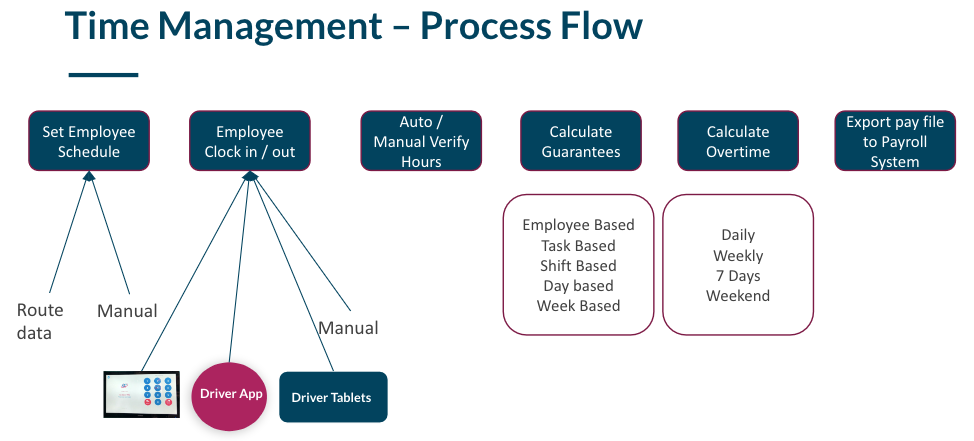
- Better driver communications so that employees can check in/out remotely, view their schedules and respond in real time to route changes
- Easier payroll management so that fleet managers no longer have to manually calculate employee guarantees/contracts and overtime and the ability to consolidate payroll for drivers, aides, subs, mechanics, and support staff.
- Improved management of daily operations, including assigning/reassigning drivers and vehicles, using real-time integration with GPS and routing systems. This allows all routes and runs to be easily reconfigured when a bus breaks down or a driver can’t come in.
By automating processes, improving communication, and leveraging advanced technologies, districts can create a seamless and transparent transportation system that benefits students, parents, and administrators alike.

IoT-Based Solutions in Bus Tracking Software
IoT technology has revolutionized bus tracking software, transforming it into a powerful tool for managing school transportation.
By connecting physical devices such as sensors, cameras, and GPS trackers to a centralized platform, IoT enables real-time monitoring and data analysis, enhancing safety, efficiency, and reliability.
Real-time tracking is one of the most significant applications of IoT in bus tracking software. GPS devices installed on school buses communicate with the software, providing accurate location data.
This information is used to monitor routes, identify delays, and notify stakeholders of any changes.
Real-time tracking ensures that buses remain on schedule and provides visibility into student journeys, enhancing safety and transparency.
IoT sensors also play a vital role in vehicle maintenance and operational efficiency.
Sensors monitor critical components such as engine performance, tire pressure, and brake functionality, collecting data that is analyzed for predictive maintenance.
By addressing potential issues proactively, predictive maintenance reduces the risk of breakdowns, lowers repair costs, and extends the lifespan of the fleet.
Student tracking is another application of IoT in bus tracking software.
RFID card readers or biometric systems log when students board and exit buses, sharing this information with parents and schools in real-time.
This feature ensures that every student is accounted for, reducing errors and enhancing security.
The combination of IoT and artificial intelligence takes bus tracking software to new heights.
AI algorithms analyze data from IoT devices to optimize routes and schedules, allocate resources efficiently, and improve decision-making.
For example, historical data on traffic patterns and weather conditions can inform route planning, ensuring that schedules are both realistic and efficient.
This synergy between IoT and AI represents the forefront of school transportation technology.
Bytecurve, for instance, delivers an entirely new scheduling and dispatch experience that will transform the way your team manages routes, tasks, and chronic driver shortages.
Trusted by dozens of districts across North America, more than 40,000 school buses rely on Bytecurve technology to improve their efficiency and safety.
By merging data from routing and GPS fleet tracking, Bytecurve users see new opportunities to enhance operations and improve safety.
Bytecurve provides the following capabilities and features:
- Create and maintain annual schedules
- Manage daily schedule changes
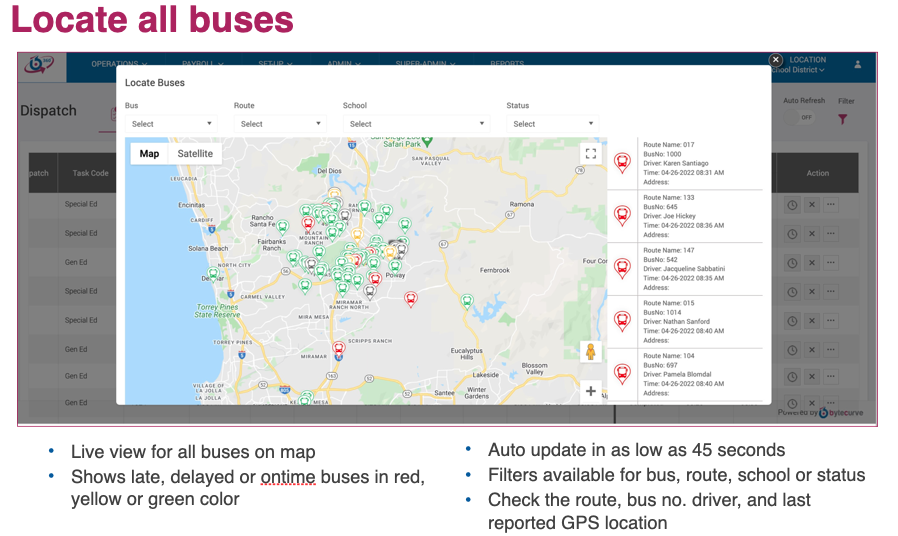
- Monitor daily dispatch with real-time status alerts
- Track on-time performance at stops and schools
- One-click guarantee and overtime calculations
- Produce time and attendance records for export to payroll system
- Single view into planned vs. actual route data
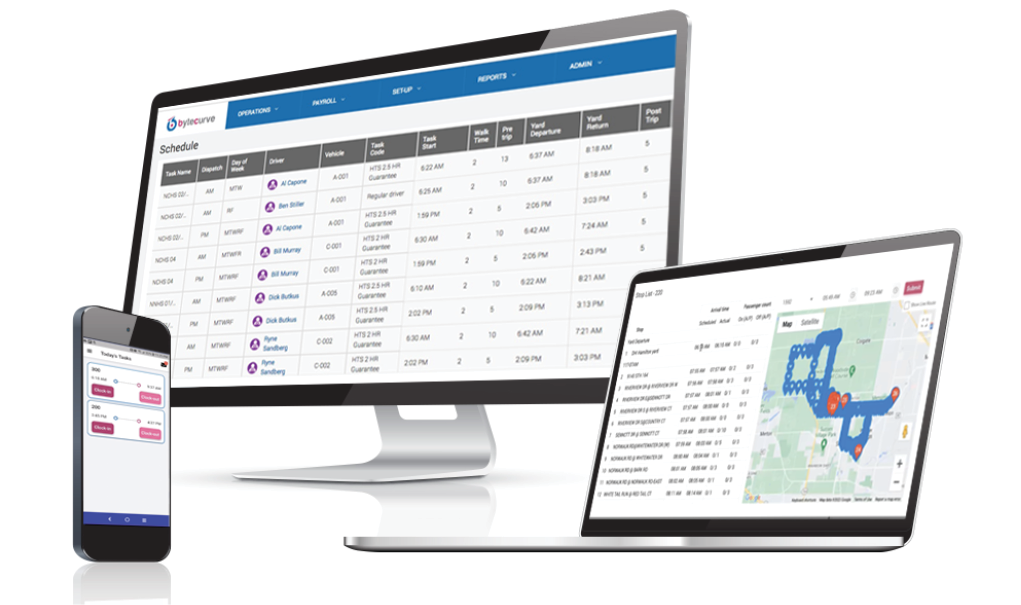 Bytecurve Provides Clarity To Routing and Payroll [/caption]
Bus Tracking Software Cost
The cost of bus tracking software varies widely based on its features and capabilities.
For school districts, understanding these costs and the potential return on investment is essential when selecting a solution.
Several factors influence the cost of bus tracking software.
The size of the fleet is a primary consideration, as larger districts often require more advanced features and additional hardware.
The level of customization needed to address specific transportation challenges can also impact costs.
While some software solutions offer basic functionalities at a lower price point, others provide comprehensive features that come at a higher cost.
Pricing models for bus tracking software typically fall into two categories: one-time licensing fees and subscription-based models.
Subscription models often include regular updates, cloud-based storage, and customer support, making them a popular choice for many districts.
However, it’s important to consider the total cost of ownership, which includes expenses for hardware, training, and ongoing support.
Despite the initial investment, bus tracking software often delivers significant cost savings over time.
Route optimization reduces fuel consumption and driver hours, while predictive maintenance lowers repair expenses and minimizes downtime.
Enhanced safety features can also lead to reduced insurance premiums and lower liability risks. These savings make the software a cost-effective solution for managing school transportation.
School districts can explore funding opportunities to offset the cost of bus tracking software.
Grants and subsidies are often available for technologies that enhance safety and sustainability, allowing districts to implement high-quality solutions within their budgets.
The Future of Bus Tracking Software
The future of bus tracking software promises even greater advancements in efficiency, safety, and sustainability.
One area of potential growth is the integration of autonomous vehicles into school transportation systems.
While still in development, autonomous buses have the potential to revolutionize the industry, offering unparalleled reliability and cost savings.
AI-driven analytics will continue to shape the future of bus tracking software.
As datasets grow larger and algorithms become more sophisticated, the software will be able to predict and adapt to changing conditions with unprecedented accuracy.
This capability will further optimize routes, schedules, and resource allocation, reducing costs and improving reliability.
Environmental sustainability will also be a key focus for the future.
As electric and hybrid buses become more prevalent, bus tracking software will need to integrate with these technologies to manage charging schedules, monitor battery health, and track energy usage.
These integrations will help school districts meet environmental goals while maintaining efficient operations.
In conclusion, bus tracking software is transforming the way school districts manage transportation.
By leveraging IoT, AI, and other advanced technologies, this software addresses the unique challenges of school bus operations, ensuring safer, more efficient, and cost-effective transportation.
As technology continues to evolve, its impact on school transportation will only grow, paving the way for smarter and more connected systems.
Integrated Student Transportation Software
About Bytecurve
Founded in 2018 by GP Singh after many years on the frontline of student transportation operations with one of the country’s largest private student transportation providers, Bytecruve is designed as the 360 view of operations.
By blending routing and GPS fleet tracking data, and adding a payroll capability as well as mobile app for two-ways communications between dispatch and drivers, Bytecurve 360 has created a new category for student transportation excellence: the dispatch command center.
“We believe many school bus operators still don’t appreciate all the potential improvments they can deliver by taking two powerful yet independent systems and merging them into a new layer of visibility and action,” Singh said. “We’re integrated with all the major providers of routing systems and GPS fleet tracking so virtually any school district with both systems can take advantage of our transformative technology.”
Trusted by dozens of districts across North America, more than 40,000 school bus rely on Bytecurve technology to improve their efficiency and safety.
“I know from first hand experience what school bus fleet leaders need to perform at their best, and we work tirelessly on our product and with our customers to deliver this experience so they can know they are investing in the safest and most efficient fleet.”

Secure
Only authorized employees will be able to access DriveOn based on a customer specific access code. This code can be turned off as needed by an authorized administrator.

User friendly
DriveOn is easy to use with a simple, smart interface.
Available on both iOS and Google Play stores.