
BYTECURVE RESOURCES
Streamline Operations with School Bus Payroll Software


Trusted by the Finest Names in School Bus Transportation
Student Transit Wisconsin

Fremont California School District

Renton Public Schools Washington
Transportation directors across the United States face a stark reality: In 2023, the median United States school bus driver earned $565 per week, approximately 43% less than the median weekly wage of $990 for all workers in the economy. This wage gap compounds an already severe staffing crisis, making every dollar of operational efficiency critical. Yet many districts still process payroll manually, burning 30+ hours weekly on spreadsheets while hemorrhaging money through time theft, calculation errors, and administrative overhead. Modern school bus payroll software eliminates these inefficiencies through GPS-verified timekeeping and automated processing, delivering documented savings that dwarf implementation costs.
Integrated Student Transportation Software
Key Takeaways: Why Transportation Directors Are Ditching Manual Timesheets
- Rome City Schools eliminated substantial annual payroll waste by replacing manual timesheets with GPS-verified time tracking that exposed buddy punching and automated overtime calculations for 106 transportation staff.
- Russellville School District achieved $15,000 in monthly payroll savings and 80% reduction in processing time through digital transformation that virtually eliminated payroll errors.
- South Bend Community Schools cut payroll processing from 30 hours per week to 1-2 hours by integrating GPS data with automated time verification, freeing staff for strategic work.
- Automated payroll systems with configurable overtime rules ensure union compliance across multiple districts while maintaining detailed audit trails for public sector accountability.
- GPS-verified timekeeping prevents time theft by validating driver location during clock-in and clock-out events, eliminating disputes over hours worked
The Hidden Cost of Manual School Bus Driver Payroll Processing
Transportation departments operate in a perfect storm of financial pressure. Driver wages remain depressed compared to the broader economy, yet as of September 2024, there were 12.2% fewer school bus drivers employed in the United States than in September 2019, leaving the sector approximately 21,200 drivers below pre-pandemic staffing levels. Districts must do more with less, making operational waste intolerable.
Manual payroll processing creates cascading inefficiencies that most transportation directors underestimate. Payroll specialists spend hours each week transcribing handwritten timesheets, cross-referencing route assignments, calculating split-shift differentials, and resolving disputes over hours worked. The South Bend case study documented 30 hours of weekly payroll labor before automation, that’s three-quarters of a full-time position dedicated solely to data entry and verification.
The financial impact extends beyond direct labor costs. Buddy punching, where one driver clocks in for an absent colleague, creates phantom payroll expenses that accumulate silently. Overtime miscalculations trigger union grievances and retroactive payments. Payroll errors damage driver morale in an environment where retention is already precarious. When a 2025 survey found that 81% of United States school administrators still face a school bus driver shortage, and 26% have had to cut or shorten bus routes as a direct result, districts cannot afford administrative friction that drives experienced drivers away.
Transportation departments using comprehensive school bus driver payroll systems report that manual processes also create liability exposure. Paper timesheets lack audit trails, making it difficult to defend against wage claims. Inconsistent overtime application across drivers creates equal pay concerns. Districts face Department of Labor scrutiny when payroll records cannot document compliance with Fair Labor Standards Act requirements.
The chronic absenteeism research reveals another dimension of this challenge. When transportation disruptions prevent students from attending school regularly, academic outcomes suffer measurably. Efficient payroll systems that support driver retention and operational reliability contribute directly to educational mission success, making payroll technology an investment in student achievement rather than merely an administrative expense.
How Rome City Schools Eliminated Hundreds of Thousands in Annual Payroll Waste
Rome City Schools in Georgia operates transportation for 6,500 students with 106 staff members. Before implementing automated school bus payroll software, the district processed payroll using manual timesheets and spreadsheet calculations. Transportation Director Elander Graham discovered the system was costing far more than anyone realized.
The GPS-verified time tracking implementation exposed systematic buddy punching that had persisted for years. When drivers clocked in for absent colleagues, the district paid for hours never worked. The automated system required drivers to clock in from their assigned bus locations, with GPS coordinates validating their presence. This single change eliminated phantom payroll expenses that had accumulated to significant annual totals.
Manual timesheet disputes consumed hours of supervisory time each pay period. Drivers contested overtime calculations, questioned split-shift differentials, and challenged route time allocations. The automated system pulled data directly from GPS tracking and routing software, creating an indisputable record of actual hours worked. Disputes dropped to near zero because the data was objective and transparent.
Overtime calculation automation delivered the largest savings component. Manual processing missed opportunities to optimize driver assignments and inadvertently triggered overtime through inefficient scheduling. The software’s configurable rules engine applied union contract provisions consistently, flagged potential overtime scenarios before they occurred, and suggested assignment alternatives that kept labor costs within budget parameters.
“We never expected this level of savings, but our business office was thrilled,” Graham explained. The dramatic annual reduction came from three sources: eliminating time theft, reducing payroll processing labor, and optimizing driver assignments to minimize overtime. The district reinvested a portion of these savings into driver wage increases, improving retention without increasing the overall transportation budget.
The implementation also created audit trail documentation that satisfied state and federal compliance requirements. Every time entry included GPS coordinates, timestamps, and route assignment data. When the district faced a wage claim investigation, the comprehensive records enabled rapid resolution with full documentation of hours worked and compensation paid.
“All those 10 minutes here and 15 minutes there, those really do add up. And it’s just wonderful peace of mind to know the drivers and the admin staff are on the same page for timesheets.”
GPS-Verified Timekeeping: The Technology Behind 80% Payroll Time Reduction
Modern school bus payroll software integrates three data streams into a single verification system: routing software assignments, GPS fleet tracking coordinates, and driver mobile app interactions. This convergence creates automated time verification that eliminates manual data entry while ensuring accuracy.
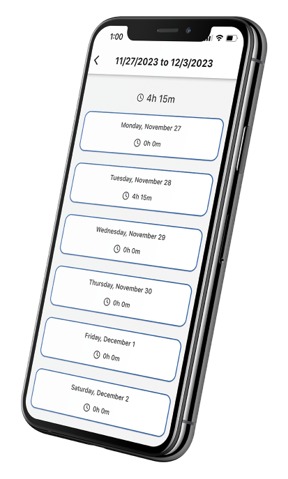
The DriveOn mobile application serves as the driver’s digital timecard. When a driver clocks in, the app captures GPS coordinates and compares them against the assigned bus location in the routing system. If coordinates match within acceptable parameters, the time entry is automatically approved. If the driver is at the wrong location or clocking in from home, the system flags the entry for supervisor review.
Russellville School District achieved 90% driver adoption of the mobile app within the first implementation phase. Transportation Coordinator Christopher King attributed the high adoption rate to the app’s simplicity and the elimination of paper manifests. Drivers appreciated the two-way messaging capabilities that allowed real-time communication with dispatch, reducing phone calls and improving response times during route disruptions.
The GPS verification process operates continuously throughout each shift. The system tracks when drivers arrive at stops, depart facilities, and complete routes. This granular data feeds directly into payroll calculations, automatically computing regular hours, overtime, and split-shift differentials based on actual GPS-verified activity rather than estimated or self-reported times.
Integration with existing routing and GPS systems ensures the school bus management platform works with whatever infrastructure districts already have in place. The software pulls route assignments from Transfinder, Tyler, or other routing platforms, then merges that data with GPS coordinates from fleet tracking systems. This interoperability eliminates the need to replace existing investments while adding the payroll automation layer that most routing and GPS systems lack.
The technical architecture includes several validation checkpoints:
- Pre-shift validation confirms driver assignment matches route schedule
- Clock-in validation verifies GPS location matches assigned bus
- Route completion validation confirms all scheduled stops were executed
- Clock-out validation ensures proper facility return procedures
- Overtime validation flags potential rule violations before payroll processing
These automated checkpoints reduce payroll processing time by handling the verification work that previously required manual review. Payroll specialists focus on exception handling rather than routine data validation, transforming their role from data entry to strategic oversight.
“In just that one example, Bytecurve paid for itself about three times over. Bytecurve listened to every word we had to say. They’re just really, really good partners.”
Union Compliance and Overtime Rules: Configurable Payroll Logic for Multi-District Operations
Transportation departments must navigate complex overtime regulations that vary by state, union contract, and employee classification. California requires daily overtime after 8 hours. Other states use weekly thresholds. Some union contracts mandate overtime for split shifts regardless of total hours. Manual payroll processing struggles to apply these rules consistently, creating compliance risk and financial exposure.
Student Transit operates approximately 500 buses across three Wisconsin districts, each with different union agreements and overtime provisions. The organization dubbed their implementation “Centralized Command, Centralized Control” because the software managed distinct rule sets from a single platform. Director Martin Klukas explained that the configurable rules engine eliminated the spreadsheet chaos that previously required separate payroll processes for each district.
The driver scheduling software that reduces overtime includes a rules engine that encodes union contract provisions into automated logic. Transportation directors configure parameters such as:
- Daily overtime thresholds (8 hours, 10 hours, or custom)
- Weekly overtime calculations (40 hours or alternative schedules)
- Split-shift differential rates and qualification criteria
- Consecutive day premiums and rest period requirements
- Holiday and weekend rate multipliers
Once configured, the system applies rules consistently across all drivers and all pay periods. This consistency eliminates the equal pay concerns that arise when manual processing applies rules inconsistently. It also prevents costly grievances by ensuring every driver receives exactly what their contract specifies.
The audit trail functionality serves both compliance and dispute resolution purposes. Every payroll calculation includes a detailed breakdown showing which rules were applied, what data triggered each calculation, and how the final compensation was determined. When drivers question their paychecks, supervisors can display the exact GPS data, route assignments, and rule applications that produced the result. This transparency has virtually eliminated payroll disputes at districts using the technology.
Public sector payroll compliance requires detailed documentation for state audits and federal wage-hour investigations. The software generates reports showing compliance with Fair Labor Standards Act provisions, state wage payment laws, and union contract requirements. These reports compile data that would take weeks to assemble manually, reducing audit preparation time from days to hours.
The school bus driver scheduling software also enables proactive overtime management. Before finalizing the next week’s assignments, transportation directors can run scenarios to identify potential overtime situations. The system flags assignments that would trigger overtime and suggests alternatives that accomplish the same transportation coverage within regular hours. This predictive capability prevents overtime rather than merely documenting it after the fact.

From 30 Hours to 2 Hours: South Bend’s Payroll Transformation Timeline
South Bend Community Schools operates transportation for 150 staff members across a complex route network. Business office staff spent 30 hours every week processing payroll before implementing automated systems. Payroll Specialist Nancy Halterman described the manual process as “challenging” and noted that it “never got better until we got Bytecurve.”
The transformation followed a structured implementation timeline that other districts can replicate:
Month 1: Assessment and Configuration
The implementation team mapped existing payroll processes, identified pain points, and configured the software to match South Bend’s specific requirements. This included encoding union contract provisions, setting up driver classifications, and establishing overtime rules. The district continued using manual processes during this phase while the new system was prepared.
Month 2: Data Migration and Integration
Historical payroll data was migrated into the new platform, and integrations were established with existing routing and GPS systems. The team verified that data flowed correctly between systems and that calculations matched expected results. Parallel processing began, with both manual and automated systems running simultaneously to validate accuracy.
Month 3: Driver Training and Rollout
Drivers received training on the mobile app, focusing on clock-in procedures, route manifest access, and two-way messaging. The district scheduled multiple training sessions to accommodate different shift schedules. Early adopters provided feedback that refined the training materials for subsequent sessions.
Month 4: Full Deployment and Optimization
The district discontinued manual timesheets and shifted to full automated processing. Payroll specialists monitored the first several pay cycles closely, addressing questions and resolving exceptions. Processing time dropped immediately from 30 hours to approximately 8 hours as manual data entry was eliminated.
Month 5-6: Efficiency Gains and Process Refinement
As staff became proficient with the system and drivers fully adopted the mobile app, processing time continued to decline. By month six, South Bend achieved the 1-2 hour processing time that has persisted since. The payroll specialist role transformed from data entry to exception handling and strategic analysis.
The implementation required change management beyond technical deployment. Some veteran drivers initially resisted the mobile app, preferring familiar paper processes. The district addressed this by emphasizing benefits: no more lost timesheets, instant access to route changes, and direct messaging with dispatch. Within two months, even the most resistant drivers acknowledged the improvements.
The business office experienced the most dramatic transformation. Staff who previously spent entire days on payroll data entry now focus on analyzing transportation costs, identifying efficiency opportunities, and supporting strategic planning. This shift from tactical to strategic work improved job satisfaction while delivering greater value to the district.
Districts considering similar transformations should plan for a 4-6 month implementation timeline from initial assessment to full efficiency gains. The investment in proper configuration, training, and change management determines whether implementations achieve the documented results or stall in partial adoption.


Russellville saves $15,000 per month in payroll
– Christopher King, Transportation Director, Russellville School District


Rome Public Schools reduced payroll by $30,000 per month with Bytecurve
— Elander Graham, Rome Transportation Director
ROI Calculator: What $15,000 Monthly Savings Actually Means for Your Transportation Budget
Russellville School District’s $15,000 monthly savings translate to substantial annual totals, a figure that transforms transportation budget dynamics. Transportation Coordinator Christopher King noted that these savings materialized even after the district increased driver wages, demonstrating that operational efficiency and competitive compensation are not mutually exclusive goals.
Transportation directors can calculate their own potential ROI using a framework based on documented district results:
Payroll Processing Labor Savings
Calculate current hours spent on payroll processing weekly, multiply by hourly cost, then multiply by 52 weeks. Apply an 80% reduction factor based on South Bend’s documented results. A district spending 20 hours weekly on payroll processing labor would achieve considerable savings through automation.
Time Theft Elimination
Estimate buddy punching and time padding at 2-5% of total payroll based on industry averages. A district with a large annual driver payroll experiencing even modest time theft can lose a significant sum annually. GPS-verified timekeeping eliminates this entirely.
Overtime Reduction Through Optimization
Analyze current overtime costs and identify the portion resulting from inefficient scheduling rather than legitimate operational needs. Districts typically reduce avoidable overtime by a meaningful percentage through proactive assignment management, producing substantial savings even in moderately sized transportation budgets.
Dispute Resolution and Grievance Costs
Quantify time spent resolving payroll disputes, including supervisor time, union representative involvement, and potential settlements. Districts report 90%+ reduction in disputes after implementing automated systems, recovering meaningful staff hours and associated costs each year.
Audit Preparation Efficiency
Calculate time spent preparing for state audits and wage-hour investigations. Automated systems reduce this by 70-80%, recovering hours that staff can redirect to higher-value work.
The cumulative savings often exceed software costs within the first year. Rome City’s dramatic annual savings represents a multiple-year payback on implementation investment. More importantly, these savings are recurring, compounding year after year while manual processing costs continue escalating with wage inflation.
Districts should also consider opportunity costs. When in 2024, 38% of United States school leaders reported that staff were being pulled away from core responsibilities or education hours to drive school buses or vans, every hour saved on administrative tasks allows reallocation to mission-critical work. Payroll specialists who transition from data entry to strategic analysis contribute greater value to the organization.
The ROI extends beyond direct cost savings to operational improvements that support the broader educational mission. Reliable transportation improves student attendance. Efficient payroll processing improves driver satisfaction and retention. Data-driven decision-making optimizes route networks. These benefits are harder to quantify but equally important to district success.
Transform Your Transportation Payroll Operations
School districts across North America have documented dramatic payroll savings through GPS-verified automation, from Rome City’s substantial annual reduction to Russellville’s $15,000 monthly savings. These results stem from eliminating time theft, reducing processing labor by 80%, and optimizing driver assignments to minimize overtime. The technology integrates with existing routing and GPS infrastructure, creating a unified command-and-control system that transforms payroll from an administrative burden into a strategic advantage.
Bytecurve 360 delivers the comprehensive school bus operating platform that bridges routing data and GPS tracking with automated payroll processing. Transportation directors gain real-time visibility into driver assignments, immediate alerts for route disruptions, and configurable overtime rules that ensure union compliance across multiple districts. The DriveOn mobile app achieves exceptionally high driver adoption rates, eliminating paper manifests while enabling two-way communication between drivers and dispatch.
Districts facing the persistent driver shortage crisis cannot afford operational inefficiencies that drain budgets and damage morale. When manual payroll processing consumes 30 hours weekly and time theft silently erodes budgets, automated systems deliver measurable ROI within the first year while freeing staff for strategic work that supports student achievement.
Request a demo to see how GPS-verified payroll automation can transform your transportation operations with documented savings and operational improvements that compound year after year.
Frequently Asked Questions
How does GPS-verified payroll prevent time theft in school transportation?
GPS-verified payroll requires drivers to clock in from their assigned bus location, with the system comparing GPS coordinates against routing data. If a driver attempts to clock in from home or an incorrect location, the system flags the entry for supervisor review. This eliminates buddy punching and time padding because drivers must physically be at the correct location to record time. The continuous GPS tracking throughout shifts also verifies that drivers are actually performing assigned routes rather than taking unauthorized breaks.
What's the average implementation timeline for school bus payroll software?
Most districts achieve full deployment within 4-6 months from initial assessment to complete efficiency gains. The first month focuses on configuration and union rule encoding. Month two covers data migration and system integration. Month three involves driver training and mobile app rollout. By month four, districts typically process their first fully automated payroll. Efficiency gains continue improving through months five and six as staff proficiency increases and processes are refined.
Can payroll software integrate with existing routing systems like Transfinder or Tyler?
Modern school bus payroll software is designed to integrate with major routing platforms including Transfinder, Tyler Versatrans, and others. The software pulls route assignments and scheduling data from the routing system, then merges it with GPS tracking coordinates to create verified time records. This interoperability means districts don’t need to replace existing routing investments. The payroll automation layer sits on top of current infrastructure, adding capabilities that routing and GPS systems alone cannot provide.
How do districts handle payroll during the driver shortage crisis?
Automated payroll systems help districts navigate staffing shortages by reducing administrative burden and improving driver retention. When districts eliminate payroll disputes through transparent GPS-verified records, driver satisfaction improves. The time saved on payroll processing allows transportation staff to focus on recruitment and retention initiatives. Additionally, the software’s proactive overtime management helps districts optimize existing driver assignments to cover routes without excessive overtime costs, stretching limited driver resources further.
What reporting features help business offices justify transportation budgets?
Comprehensive reporting tools generate detailed analyses of labor costs, overtime trends, route efficiency, and operational patterns. Business offices can produce reports showing cost per route, cost per student transported, and year-over-year efficiency improvements. The audit trail documentation satisfies state and federal compliance requirements while providing data to defend budget requests. Transportation directors use these reports to demonstrate ROI from technology investments and identify additional efficiency opportunities that further reduce costs.

Secure
Only authorized employees will be able to access DriveOn based on a customer specific access code. This code can be turned off as needed by an authorized administrator.

User friendly
DriveOn is easy to use with a simple, smart interface.
Available on both iOS and Google Play stores.