
BYTECURVE RESOURCES
AI Helps Mitigate School Bus Driver Shortage: Colorado Schools Using AI To Fight Driver Shortage


Our School Bus Operating platform arms your team with the information they need to improve decision making around safety, reducing costs, and being more efficient each day.
Trusted by dozens of public and private student transportation fleets to improve how they do business.
Trusted by the Finest Names in School Bus Transportation


Colorado School District Enlists AI To Help Mitigate Ongoing School Bus Driver Shortage
The Artificial Intelligence (AI) revolution has generated many anxiety-inducing headlines about computers coming for our jobs.
But what happens when there aren’t enough willing candidates for the jobs that are on offer?
In one Colorado school district, officials have turned to AI to help fill the gap created by the nation’s chronic bus driver shortage.
District 11 in Colorado Springs was only able to hire around 60 of the 110 school bus drivers it budgeted for during the past school year, leaving many students without reliable transportation, according to a report by CBS News.
While some districts have relied more heavily on the drivers they do have, staggering start and closing times so that their drives can handle more routes, Colorado Springs’ District 11 took a more novel approach:
They enlisted a ride-sharing company’s AI technology to expand the available pool of drivers and vehicles that could ferry children to and from their schools.
Carefully vetted ride-share drivers began taking on routes, with the parent company alerting parents via text when their children were picked up and dropped off.
“After eight months of using the AI software, District 11 reports a nearly 50% reduction in bus routes, improved on-time arrivals, and higher driver pay,” CBS reported.
“Superintendent Michael Gaal said that saving money from the service helped him protect the positions of at least 10 teachers.”
Despite aggressive measures by state and school officials to hire more drivers, and a good deal of media coverage on the topic, there is no apparent end in sight to the bus driver shortage.
“The problem remains severe across the country,”
reports NewsToday, the reporting arm of the National Education Association.
“According to research by the Economic Policy Institute, school bus driver employment continues to be far below pre-pandemic levels. There were approximately 192,400 bus drivers working in K–12 schools in September 2023, down 15 % from September 2019.”
In St. Louis, The Associated Press reported that school officials were so desperate for transportation solutions that they offered to pay some families to drive their kids to and from school.
Technology is uniquely positioned to help school districts address a shortage that increased hiring efforts have thus far failed to do.
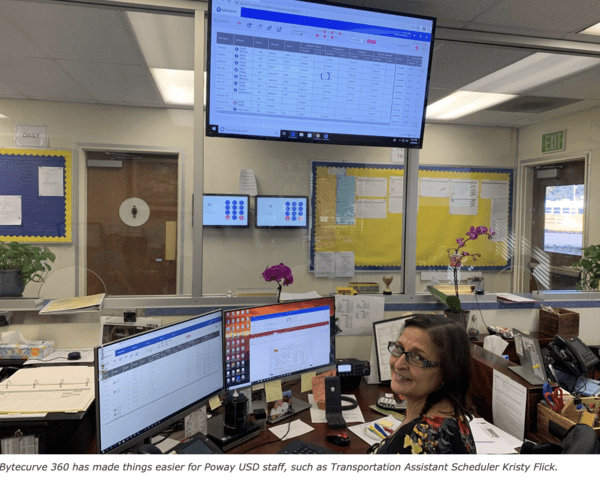
Bytecurve360 delivers a transformative operational experience.
Some of the most essential features include:
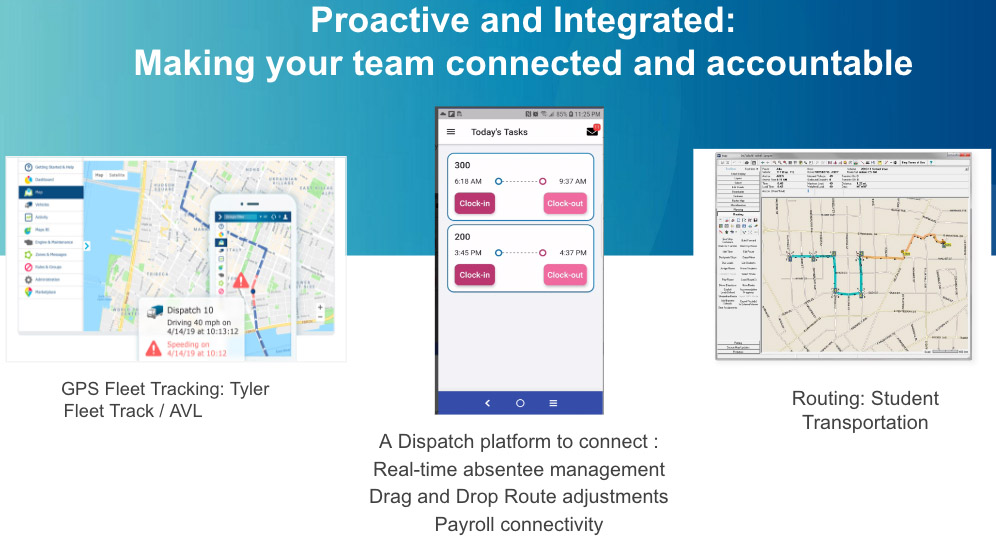
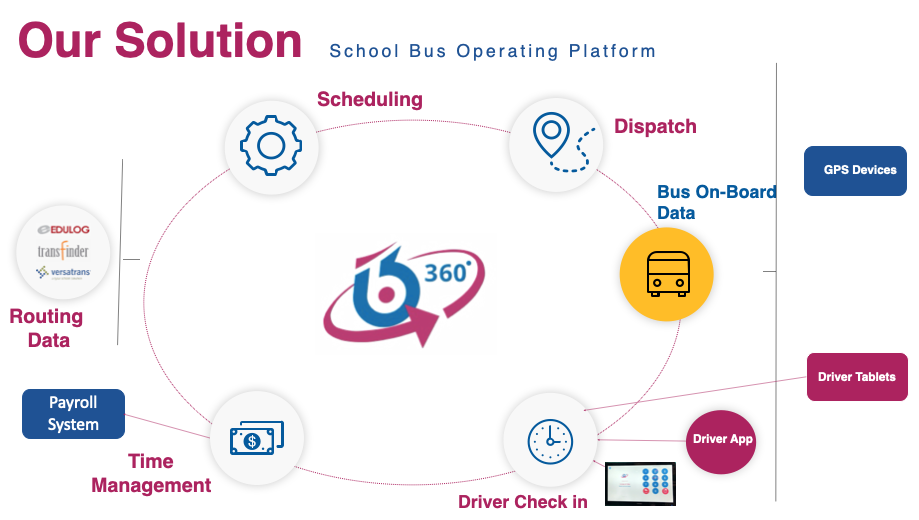
- Better Driver communications so that employees can check in/out remotely, view their schedules and receive messages on their smartphones.
- Easier payroll management so that you no longer have to manually calculate employee guarantees/contracts and overtime.
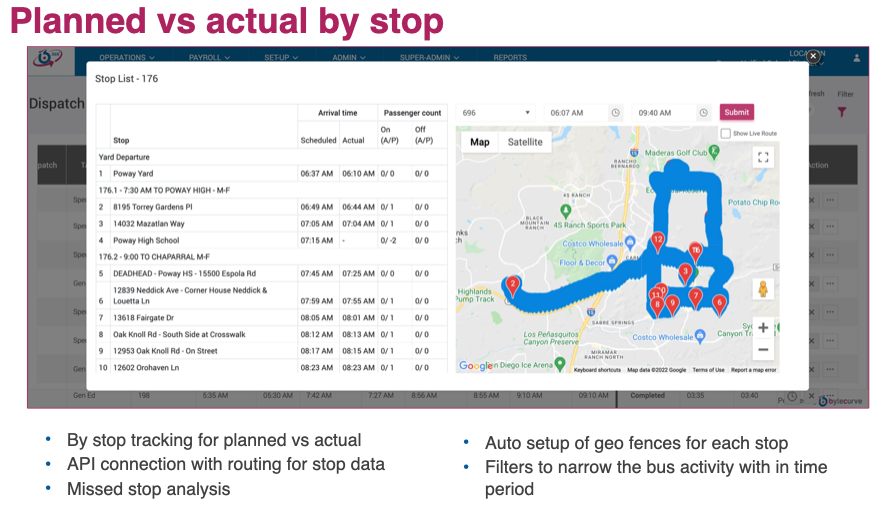
- Simpler management of daily operations, including assigning/reassigning drivers and vehicles, using real-time integration with GPS and routing systems. This allows all stops to be easily be rerouted when a bus breaks down or a driver can’t come in.
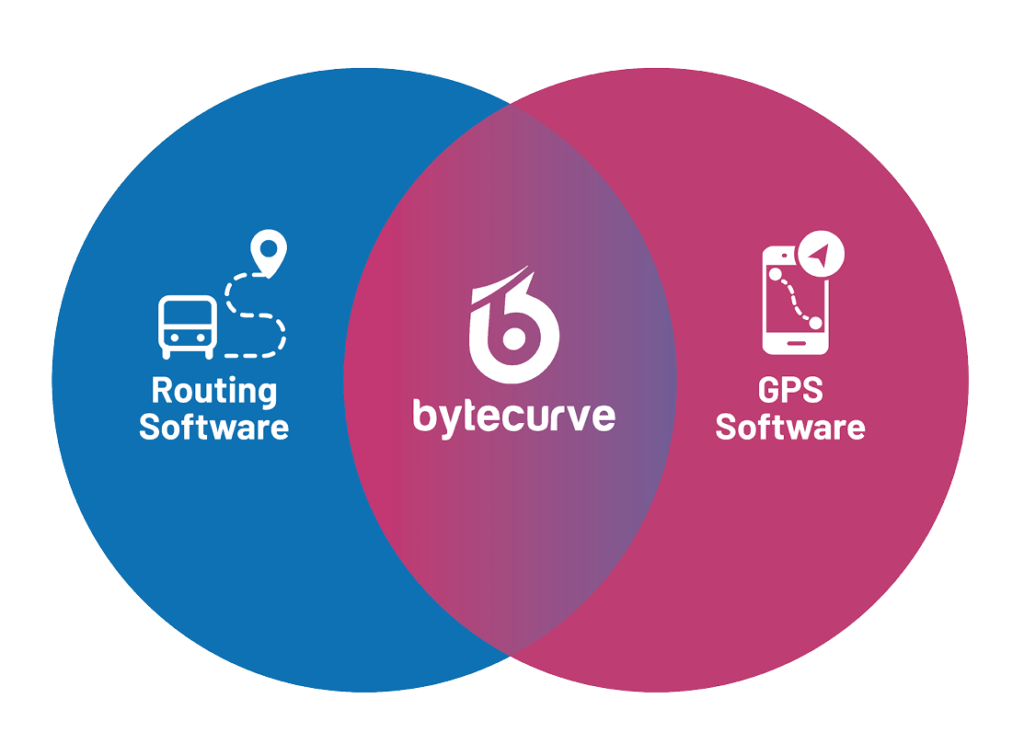
As the only software solution that merges GPS Fleet Tracking and routing data into a new solution, Bytecurve360 is the fastest growing technology serving the student transportation industry thanks to its ability to significantly improve:
- Payroll operations, including the streamlining of different pay codes and jobs or tasks between and among staff members
- Dispatching operations, including the ability to alter routes, runs and tasks in real-time to respond to later and/or absent drivers
- Real-time app-powered communications, including the ability for drivers in the field to respond to route changes via the app
The integration of real-time tracking, optimized routing, student identification, behavior monitoring, effective communication, and data analytics collectively contributes to a safer and more efficient transportation system.
Here are some ways that AI can help school districts and government officials ease the impact of the driver shortage:
1. Route Optimization
Dynamic Routing: AI can analyze real-time traffic data, historical route performance, and other variables to create the most efficient bus routes. This can minimize travel time and fuel consumption, allowing fewer drivers to cover more routes effectively.
Adaptability: AI can quickly adapt to changing conditions, such as road closures, weather events, or accidents, and reroute buses in real-time to ensure timely pick-up and drop-off.
2. Predictive Maintenance
Proactive Maintenance Scheduling: AI can predict when a bus will likely need maintenance based on historical data and real-time sensor inputs. This helps in preventing unexpected breakdowns, ensuring that buses remain in service, and reducing downtime.
Resource Allocation: By predicting maintenance needs, AI can help in better planning and allocation of repair resources, keeping the fleet operational with fewer disruptions.
3. Driver Allocation and Scheduling
Optimal Driver Assignment: AI can analyze driver availability, qualifications, and work preferences to assign the right drivers to the right routes, maximizing efficiency and ensuring compliance with labor regulations.
Shift Management: AI-driven scheduling tools can optimize driver shifts, reducing overtime costs and preventing burnout, which is crucial in managing a limited pool of drivers.
4. Fleet Management
Efficient Use of Fleet: AI can help determine the most efficient use of the available bus fleet, including deciding when to use smaller buses for routes with fewer students and larger buses for more populated routes.
Electric and Hybrid Bus Management: For districts using electric or hybrid buses, AI can optimize the charging schedules and routes based on battery life and charging station availability.
5. Student Tracking and Safety
Real-Time Monitoring: AI systems can track the real-time location of buses and students, ensuring that school officials and parents know where students are at all times.
Automated Attendance: Using RFID or other tracking technologies, AI can automatically log student attendance as they board and leave the bus, providing accurate records and alerts if a student is missing.
6. Enhancing Communication
Parent and Student Apps: AI-powered apps can provide real-time updates to parents and students about bus locations, estimated arrival times, and any delays, improving communication and reducing uncertainty.
Emergency Notifications: In the event of an emergency, AI systems can quickly send alerts to parents, school officials, and emergency responders, ensuring a coordinated and swift response.
7. Data Analytics and Decision Making
Predictive Analytics: AI can analyze data from various sources to predict trends and issues, such as potential driver shortages, allowing officials to take proactive measures.
Scenario Planning: AI can run simulations and what-if scenarios to help school and government officials understand the potential impact of different strategies and make informed decisions.
8. Training and Support
Driver Training: AI-driven simulators and training programs can help in quickly training new drivers, improving their skills, and ensuring they are prepared for real-world conditions.
Ongoing Support: AI can provide ongoing support and feedback to drivers, helping them improve their performance and adhere to safety protocols.
9. Incentive Programs
Performance Monitoring: AI can track driver performance and help design incentive programs that reward safe and efficient driving, which can help retain existing drivers and attract new ones.
By leveraging these AI capabilities, school and government officials can navigate the challenges posed by the school bus driver shortage, ensuring that students are transported safely and efficiently.
The integration of AI helps optimize resources, improve communication, enhance safety, and support better decision-making processes.
Bytecurve can help pupil transportation leaders overcome many of the common challenges they face across the country, including:
- Staffing shortages: A chronic, nationwide shortage of school bus drivers challenges school districts to provide adequate transportation for students. Regular absenteeism also presents challenges. Bytecurve can help by connecting drivers to fleet management for real-time adjustments driven by not having enough drivers
- Funding constraints: School districts face budget constraints, although COVID-19 relief funding by the federal and state governments has allowed many districts to invest in technologies they need to perform better. Bytecurve can be part of that investment to deliver improved services
- Technology challenges: Implementing new technologies, such as GPS tracking and routing software, which can help improve the efficiency and safety of student transportation, presents challenges to districts. Bytecurve provides white-glove implementation services and robust ongoing support, often helping districts not only with the 360 solution but also get more out of their existing investments.
- Compliance with regulations: School districts must comply with a variety of federal and state regulations, which can add to the administrative burden of providing student transportation. Bytecurve’s in-house expertise consists of student transportation experts who can share best practices from other districts and fleets.
- Safety concerns: Student transportation is a high-risk activity, and school districts must take steps to ensure the safety of students and drivers. Bytecurve’s dispatch solutions decrease the likelihood that students are left outside waiting for a late bus thanks to its ability to reassign routes and drivers in seconds.
And, in so doing, companies offering these AI-based solutions might just poke a little hole in that narrative about AI eliminating jobs.
“Here’s a case of AI addressing a worker shortage,” concluded Axios in a piece about the Colorado Springs program, “rather than replacing people who’d rather keep their jobs.”
Integrated Student Transportation Software
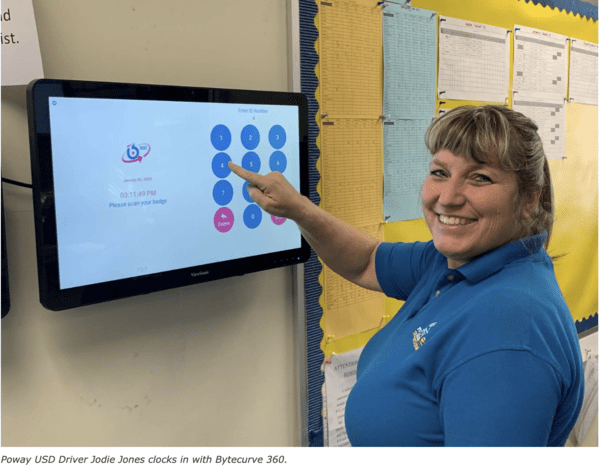
If you are in the market for a school bus driver scheduling software, here’s what to look out for
- The application should feature a user-friendly design to enable administrators, drivers, and parents to understand and navigate the system. It should be cloud-based and be supported by U.S.-based support team who appreciate the unique demanding environment of a school bus fleet.
- The platform should include ongoing and comprehensive training and support for all users to guarantee they’re comfortable with the tool and can use it effectively. Bytecurve features ongoing support from our team of school bus operations experts.
- The school bus driver scheduling software platform you eventually select should commit to continuous updates and maintenance to ensure it remains current and devoid of bugs or glitches. Bytecurve is founded by innovators who will never stop improving the platform based on the needs and wants of their customers and school bus fleet operators.
- The app should be flexible and customizable to tailor it to the unique needs of each school or district. Bytecurve will work with each district or contract to build their tailored solution that meets their unique requirements.
- The software should be capable of integrating with other related tools like student information systems to guarantee accurate and up-to-date data is being used to create and manage driver schedules. Bytecurve has integrations with all of the major routing and GPS fleet tracking solutions so that virtually any school bus fleet can enjoy the benefits of the transformative technology.

Secure
Only authorized employees will be able to access DriveOn based on a customer specific access code. This code can be turned off as needed by an authorized administrator.

User friendly
DriveOn is easy to use with a simple, smart interface.
Available on both iOS and Google Play stores.