

BYTECURVE RESOURCES
DeSoto County School District Invests in Payroll Software to Enhance Efficiency


Our School Bus Operating platform arms your team with the information they need to improve decision making around safety, reducing costs, and being more efficient each day.
Trusted by dozens of public and private student transportation fleets to improve how they do business.
Trusted by the Finest Names in School Bus Transportation



DeSoto County School District Invests in Payroll Software to Enhance Efficiency
Largest District in Mississippi turns to Bytecurve to Retire Antiquated, Cumbersome Payroll Processes
“I’m 100 percent in on Bytecurve.
I have done my homework on the system and seen it work for other systems, so I’m 100 percent focused on making it a success.”
– Levi Williams, Transportation Director, DeSoto County, Mississippi
DESOTO COUNTY, MISSISSIPPI— Levi Williams knew there had to be a better way to manage his student transportation department.
Inefficiencies around payroll and driver accountability were a constant challenge, costing his administrative team valuable time and scarce resources.
So he embarked on a mission to improve the systems associated with DeSoto County Schools.
After eight years leading Mississippi’s largest school bus fleet, he had spent the past several years learning about the technologies other school bus fleet leaders leverage while making the rounds at industry conferences and events.
He recognized that both GPS fleet tracking and an automated payroll system were two investments that could transform his department, saving time and money across the operation.
“We knew there was a lot we could improve with technology and wanted to be cautious on how we approached vendors and opportunities,” he explained.
“It had to be a good fit for our team and not just a cool piece of software – it had to deliver real value and not be something that would get in our way on the day-to-day.”
Williams said the monumental changes precipitated by the pandemic and how many of the changes persisted well after social distancing faded into the past led him toward a comprehensive rethinking of the department’s entire digital footprint.
“Routing and scheduling and how we responded to missing and late drivers never went back to the way we worked before COVID,” he said. “And it forced me to think more about how we manage so much across our organization to help our staff better manage these complex challenges.”
“Our team is so much more flexible and thoughtful now about how we manage the routes and drivers, and it was time to invest in technologies to continue the improvements.”
A Wide Perspective: From the Classroom to the Bus Yard
Williams is not your typical student transportation leader who worked his way up from early mornings and late nights as a bus driver or admin staff into his leadership role. He was an educator first, an administrator second, and then a student transportation executive.
He taught biology, anatomy, and biology across middle and high school before serving as a vice principal.
The common thread from his first day in the classroom as a freshman life science teacher to leading the largest school bus fleet in Mississippi was serving the students.
First, second, and last, it was about supporting the education journey of the students at DeSoto County Schools.
“Middle school was my best time, my favorite memories of the classroom,” he said. “They are learning so much and discovering who they are. By high school, they have their friends and their niche, but in middle school they are trying to discover who they are and where they fit in.”
His experience in the classroom and as a school leader has made him sensitive to every facet of the student transportation department.
“I’m unique as I can appreciate the perspective of so many stakeholders, and I also appreciate how complex and challenging it is to keep this department running safely and efficiently,” he said.
“And my focus is always about the students and our community. It is my job to keep them safe and deliver transportation services that keep the instructional side running smoothly.”
That is a healthy challenge with 450 drivers managing double and even triple routes every day.
Not to mention the regular drumbeat of the unpredictable and unforeseen common across so many student transportation departments.
From late drivers to routes suddenly thrown into chaos by road construction or students moving addresses – nevermind foul weather, bus breakdowns, or student misbehavior. It is never the same day twice, and he realized technology could help mitigate the pervasive challenges.
Williams explained that his department for too long worked like a “mom and pop” business that relied on pen and paper for almost everything outside of safety cameras and routing software.
The buses had long been equipped with cameras to keep a watchful eye on students and their surroundings, but the routing system was not enough to support their operations.
“After eight years in the role, it was definitely time to improve how we operate, and we knew payroll had to be a major challenge we took on,” he said. “With our upgraded routing and taking on Zonar to deliver our GPS, we knew that payroll had to be a big part of our improvement journey.”
The payroll requirement introduced Williams and his team to one of the fastest-growing software solutions in the student transportation industry: Bytecurve.
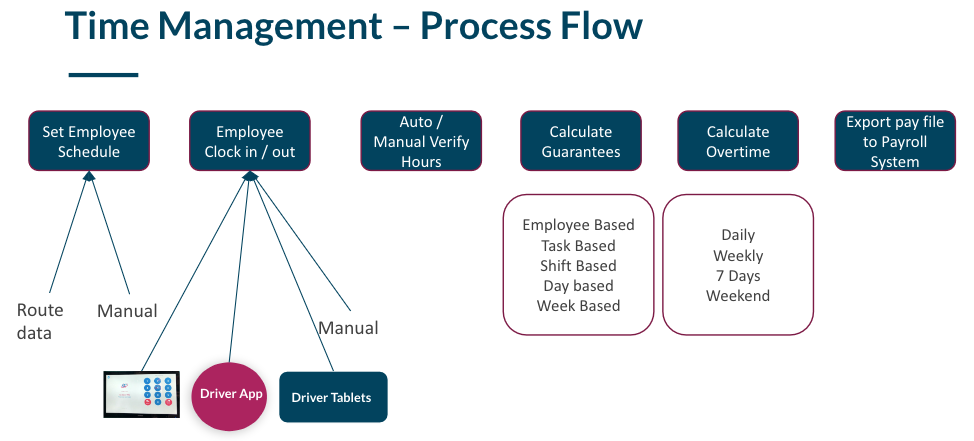
Williams explains their old way of doing business as something familiar to student transportation fleet leaders across North America: drivers completing timesheets with pen and paper, driver assignments stored in a mountain of spreadsheets, and every little adjustment producing a series of changes that could impact service.
“We translated what the drivers gave us to excel and gave it to payroll,” he said. “It was the oldest of the old school.”
In short, almost everything was analog instead of digital, making every process strewn with opportunities for common mistakes as well as scores of instances of validating and re-validating driver hours.
After adopting Bytecurve’s payroll solution, the migration to digital has turned pen and paper into dinosaurs.
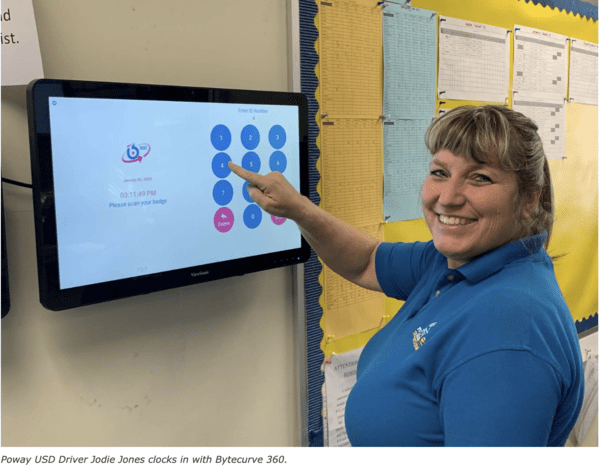
“Now they use the tablet on the bus to run their routes and to clock in and out.
Soon, we are going to move to the DriveOn app so they can simply use their phone to clock in and out,” Williams explained.
He said massive growth in the district prompted the need to buy more buses and upgrade other educational facilities, delaying his move to adopt a GPS solution.
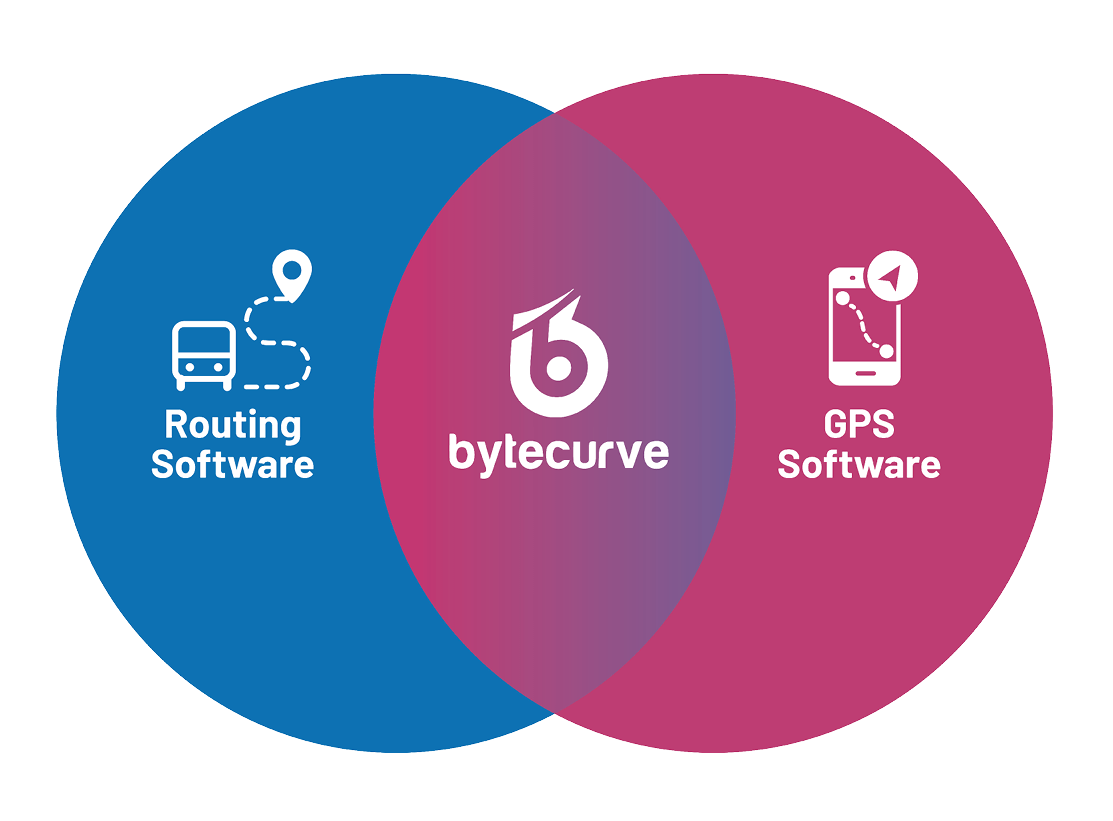
Since Bytecurve relies on merging data from both routing and GPS to produce a more integrated payroll solution, the payroll upgrade was conducted soon after the Zonar GPS system was tested and approved.
Bytecurve’s dispatch solution also addresses challenges associated with managing that chaotic first hour of every school day.
He was faced with the same questions of so many other student transportation fleets
Which driver was on time?
Which was missing altogether?
And when should the admin office assign substitutes and new drivers?
Since Bytecurve pulls data from GPS and routing and links it to drivers checking in, it’s immediately clear which routes are not started and where immediate re-assignments need to be made.
Like many districts that adopt Bytecurve, the district is continuing to use pen-and-paper timekeeping during the initial onboarding, facilitating accurate comparisons as well as a gradual migration from analog to digital timekeeping.
“There was some initial skepticism, like we expect with almost any new technology when it’s being introduced to nearly 500 people who are used to a certain way of working, but we seem to have moved beyond that and now more than 90 percent of the feedback is positive,” Williams said.
“The drivers recognize the mobile app gives them a lot more flexibility and allows us to be more intelligent in the way we shift routes and assignments every day,” Williams said. “It’s not about trying to micromanage their shifts or routes; it’s about helping the entire department be more efficient and productive.”
In fact, the app allows drivers to pick up new routes and assignments more simply, increasing the potential for more pay and even overtime for some drivers.
Business Leader: Crucial Buy In
Williams made a point to include the district’s business officials as part of the payroll upgrade vetting, hoping to increase enthusiasm and recruit more advocates.
“Our business leader saw how user friendly it is, and she was ready to give it a try,” Williams said.
Some people said, “We have a system that’s working,” but the director saw an opportunity to significantly improve how we operate on our side and on the business side.”
The Russellville, Arkansas school district saw about $15,000 per month in payroll savings, according to their payroll department. And other districts are realizing similar savings by simply taking advantage of linking the routes or runs to hours worked, removing the extra few minutes drivers often acquire before and after routes.
When this savings is multiplied across dozens of drivers like the typical district employs – or the hundreds of drivers at DeSoto County – the savings can snowball into real money.
“This is our goal with every customer we serve,” said GP Sing, Founder and CEO, Bytecurve. “After spending years in the industry myself on the contractor side of operations, I know how challenging it can be to drive accountability into payroll and to have the real-time information required to respond to the shifting daily dynamics.
We strive to show how much money we can save our customers while also giving drivers a more responsive app for better service.”
Over-communicate and training, training, training
Williams introduced a robust onboarding program for Bytecurve and his GPS investment that includes a robust training and communication program.
“We have to train the mechanics on the new inspection tool, and we know that’s going to be a big improvement for them moving to a digital process.”
He explained that routine verifications of driver hours have now shifted to making sure the new system complies with labor laws.
Now he is relying on his team and their business office to align the legal and compliance needs with a more efficient timekeeping solution.
“They understand the law as it relates to workers. I am tunnel-focused on getting the students to school as safely as possible and integrating this technology.
But payroll is asking the right questions: Do you have a plan in place if this happens, or a program in place when that happens,” Williams said.
“We’re working together to build those plans together.”
He said Jason McIntosh from Bytecurve has served as an exceptional trainer.
“We work with Jason to understand how to take advantage of all the features to ensure that return on investment,” he said. “And the other members of the Bytecurve support team have been there every step of the way.”

GPS Fleet Tracking: The Other Crucial Piece
School systems were among the first public agencies to adopt GPS fleet tracking to take advantage of its significant ability to drive safer operations.
From speeding alerts and geofencing features to keep drivers tied to their routes and the ability to help routers respond to real-time weather, traffic accidents, and road closures, GPS fleet tracking is a powerful tool to deliver enhanced service for virtually any iconic yellow school bus.
When coupled with efficiency gains from reduced idling and the peace of mind for immediate location alerts in the event of an accident or an incident on the bus, GPS fleet tracking is recognized as paying for itself in both real and figurative dollars.
By merging routing and GPS fleet tracking data and combining it with a mobile application that allows drivers to check in remotely, Bytecurve revolutionizes the way dispatch and payroll teams operate, driving significant cost savings while improving service by making routes, roles, and tasks far more flexible than a legacy route-based, pen-and-paper method.
“We’re thankful so many school bus fleets have invested in the GPS tracking and that we’ve built strong relationships with many of the most popular GPS and routing systems so we can serve fleets like DeSoto and many more.” Singh said.
“And we’re committed to continuing to develop our solution to solve more of the pressing challenges facing student transportation leaders.”

If you are in the market for a school bus driver scheduling software, here’s what to look out for
- The application should feature a user-friendly design to enable administrators, drivers, and parents to understand and navigate the system. It should be cloud-based and be supported by U.S.-based support team who appreciate the unique demanding environment of a school bus fleet.
- The platform should include ongoing and comprehensive training and support for all users to guarantee they’re comfortable with the tool and can use it effectively. Bytecurve features ongoing support from our team of school bus operations experts.
- The software should be capable of integrating with other related tools like student information systems to guarantee accurate and up-to-date data is being used to create and manage driver schedules. Bytecurve has integrations with all of the major routing and GPS fleet tracking solutions so that virtually any school bus fleet can enjoy the benefits of the transformative technology.

Secure
Only authorized employees will be able to access DriveOn based on a customer specific access code. This code can be turned off as needed by an authorized administrator.

User friendly
DriveOn is easy to use with a simple, smart interface.
Available on both iOS and Google Play stores.