
BYTECURVE RESOURCES
Streamline School Bus Driver Management and Cut Costs Fast


Trusted by the Finest Names in School Bus Transportation
Student Transit Wisconsin

Fremont California School District

Renton Public Schools Washington
In 2024, 38% of United States school leaders reported that staff were being pulled away from core responsibilities or education hours to drive school buses or vans, according to a nationwide survey of more than 400 school leaders. This operational crisis reflects a deeper problem: traditional manual management systems cannot support modern transportation operations. School districts running on spreadsheets, paper timesheets, and disconnected GPS platforms face chronic payroll errors, driver retention challenges, and operational inefficiencies that compound the nationwide driver shortage.
Modern school bus driver management platforms solve these problems by integrating GPS-verified timekeeping, mobile driver communications, automated payroll processing, and centralized dispatch dashboards into a single command-and-control system. Districts that implement comprehensive driver management solutions report significant payroll savings, substantial reductions in administrative processing time, and strong driver adoption rates.
Integrated Student Transportation Software
Key Takeaways: How School Bus Driver Management Systems Transform Operations
- GPS-verified timekeeping eliminates buddy punching and manual timesheet errors, reducing payroll processing time dramatically
- Mobile driver applications with two-way messaging achieve very high adoption rates when designed for ease of use, enabling real-time schedule updates and digital clock-in functionality
- Centralized dispatch dashboards replace whiteboards and multiple spreadsheets with real-time alerts for late and absent drivers, enabling proactive route management
- Automated payroll integration with routing and GPS data delivers substantial monthly savings by eliminating overpayment and streamlining administrative workflows
- Districts using integrated driver management platforms avoid costly bus additions through data-driven route optimization, with documented savings of tens of thousands of dollars annually per avoided vehicle
Why Most School Districts Still Face Bus Driver Shortages in 2025
A 2025 survey found that 81% of United States school administrators still face a school bus driver shortage, and 26% have had to cut or shorten bus routes as a direct result, as reported by Stateline citing HopSkipDrive survey data covered by School Bus Fleet. The persistence of this crisis stems from structural workforce challenges that manual management approaches cannot address. In 2021, 72.6% of state and local government school bus drivers in the United States were age 50 or older, nearly double the 37.5% share among all state and local government employees, making the driver workforce highly vulnerable to attrition, according to the Economic Policy Institute.
Traditional paper-based systems exacerbate retention problems by creating administrative friction that drives experienced operators away. Drivers forced to manage paper route books, manual clock-in sheets, and delayed schedule updates face unnecessary complexity in an already demanding role. Transportation directors spend hours each week correcting timesheet errors, resolving payroll disputes, and manually reassigning routes when drivers call in absent. This reactive management style prevents districts from addressing the root causes of turnover.
The shortage forces operational compromises that undermine service quality. Districts reduce route coverage, extend ride times for students, and pull administrative staff from educational duties to fill driver gaps. These stopgap measures increase costs while degrading the student transportation experience that families depend on. For comprehensive strategies addressing workforce challenges, see our guide on school bus driver shortage management.
Modern driver management platforms attack these problems by removing administrative barriers that frustrate drivers and consume director time. GPS-verified timekeeping eliminates timesheet disputes. Mobile apps deliver instant schedule updates. Automated payroll processing frees directors to focus on recruitment and retention instead of correcting manual errors. Districts that implement integrated systems report improved driver satisfaction alongside measurable cost savings, creating a foundation for sustainable workforce management.
How Russellville School District Achieved $15,000 Monthly Savings Through Automated Driver Management
The Russellville School District case study demonstrates the financial impact of transitioning from manual to automated driver management. Serving 5,694 students across 99 square miles with a fleet of 65+ buses, Russellville faced the challenges common to mid-sized districts: paper-based payroll taking up to 15 days each month, frequent timesheet errors requiring manual correction, and no efficient way to verify driver time entries against actual route performance.
The district implemented Bytecurve 360 integrated with their existing GPS system to create a unified platform merging routing data, real-time fleet tracking, and payroll processing. The transformation delivered immediate results. Russellville achieved $15,000 in monthly payroll savings by eliminating overpayment from inaccurate manual timesheets. The district reduced payroll processing time by 80%, freeing administrative staff for higher-value work. Driver adoption of the mobile app reached 90% within months, demonstrating that well-designed technology gains acceptance even among traditionally change-resistant workforces.
Christopher King, Transportation Coordinator at Russellville, explained the cumulative impact: “We had a lot of spreadsheets and a lot of time invested in keeping all of our routes and drivers organized before we went on this journey to improve how we do business. Now we’ve got systems in place that automate so many of our manual tasks.”
The financial benefits extended beyond direct payroll savings. Automated time verification virtually eliminated payroll errors, removing a source of driver frustration that contributed to turnover. Real-time visibility into driver availability enabled proactive route management, reducing last-minute scrambles when drivers called in absent. The platform’s integration with existing GPS and routing systems meant Russellville leveraged its prior technology investments rather than replacing them, maximizing return on infrastructure already in place.
Districts considering similar transformations should note that Russellville’s results came from addressing the full driver management workflow, not isolated point solutions. GPS-verified timekeeping, mobile driver communications, automated payroll processing, and centralized dispatch visibility worked together to eliminate manual processes at every step. This comprehensive approach delivered savings that individual tools could not achieve alone. For deeper technical context on how integrated platforms merge routing and GPS data, review our overview of school bus management software platforms.
“All those 10 minutes here and 15 minutes there, those really do add up. And it’s just wonderful peace of mind to know the drivers and the admin staff are on the same page for timesheets.”
Core Components of Effective School Bus Driver Management Systems
Modern school bus driver management platforms consist of four integrated pillars that work together to replace manual processes:
- GPS-verified time and attendance: Automated clock-in and clock-out functionality that uses GPS location data to verify driver presence, eliminating buddy punching and manual timesheet errors while creating an auditable record of actual work time
- Mobile driver applications: Smartphone-based tools that deliver real-time schedule updates, route assignments, and two-way messaging with dispatch, replacing paper route books and enabling instant communication during disruptions
- Centralized dispatch dashboards: Single-view command centers that consolidate driver availability, route assignments, and real-time alerts for late or absent drivers, replacing whiteboards and multiple spreadsheets with unified operational visibility
- Automated payroll integration: Systems that merge GPS tracking data with routing information to calculate accurate pay based on verified work time, eliminating manual timesheet entry and reducing payroll processing time substantially
These components function as an integrated system rather than standalone tools. GPS-verified timekeeping feeds automated payroll processing with accurate data. Mobile driver apps receive assignment updates from the centralized dispatch dashboard. Real-time fleet tracking merges with routing information to provide the operational visibility that enables proactive management. Districts that implement partial solutions miss the compounding benefits that come from full integration.
The technical architecture matters because school bus operations involve multiple data sources that traditional systems keep separate. Routing software plans the routes. GPS systems track vehicle locations. Payroll platforms process time entries. Driver communication happens through phone calls and text messages. When these systems remain disconnected, directors manually bridge the gaps by transferring data between platforms, creating opportunities for error and consuming administrative time.
Effective driver management platforms eliminate these gaps by serving as the integration layer that connects routing, GPS, payroll, and communications into a unified workflow. A driver clocks in through the mobile app, which verifies location via GPS and records the time entry. The dispatch dashboard shows the driver as available and assigns them to a route. The GPS system tracks the bus in real time during the route. When the driver clocks out, the platform calculates pay based on verified work time and sends the data to payroll processing. This automated workflow removes manual intervention at every step.
Transportation directors evaluating platforms should prioritize integration capabilities over feature lists. A system with extensive features but poor integration creates new silos instead of eliminating existing ones. The platform should merge seamlessly with the district’s current routing and GPS infrastructure rather than requiring wholesale replacement. For districts managing complex scheduling requirements, see our guide on bus driver scheduling software for detailed criteria on overtime management and compliance features.
GPS-Verified Timekeeping: How South Bend Cut Payroll Processing From 30 Hours to 2
GPS-verified timekeeping eliminates the two biggest sources of payroll error in school transportation: buddy punching and manual timesheet inaccuracies. Traditional paper-based systems rely on drivers to record their own clock-in and clock-out times, creating opportunities for both intentional manipulation and honest mistakes. Drivers running late may ask colleagues to clock them in. Handwritten timesheets become illegible. Route delays lead to disputes about actual work time. Transportation directors spend hours each week investigating discrepancies and correcting errors before submitting payroll.
South Bend Community Schools faced these exact challenges with a fleet of 150 staff members. Nancy Halterman, the district’s transportation administrator, described the pre-automation reality: “It was a challenging process that never got better until we got Bytecurve.” The district’s manual payroll workflow consumed 30 hours per week, with staff manually entering timesheet data, cross-referencing route schedules, and resolving disputes about recorded hours. The administrative burden prevented the transportation department from focusing on service improvement and driver support.
GPS-verified timekeeping solves these problems through location-based authentication. Drivers clock in and out through a mobile app that captures GPS coordinates at the moment of each time entry. The system verifies that the driver is physically at the designated location (typically the bus yard or a specific vehicle) before accepting the clock-in. This location verification makes buddy punching impossible, as a driver cannot clock in for a colleague unless they are standing in the same place.
The platform then merges GPS time data with routing information to create an automated payroll record. When a driver completes a route, the system knows the scheduled start time, the actual GPS-verified clock-in time, the route duration, and the GPS-verified clock-out time. This data flows directly to payroll processing without manual entry, eliminating transcription errors and dramatically reducing processing time. South Bend cut their weekly payroll processing from 30 hours to 1-2 hours through this automation.
The accuracy benefits extend beyond time savings. GPS-verified records provide auditable documentation that protects districts during payroll disputes or compliance audits. When a driver questions their recorded hours, the transportation director can pull GPS data showing exactly when and where the driver clocked in and out. This objective evidence resolves disputes quickly and fairly, removing a source of friction that contributes to driver dissatisfaction and turnover.
Districts implementing GPS-verified timekeeping should establish clear policies about acceptable clock-in locations and grace periods for minor delays. The system should allow reasonable flexibility for drivers who arrive a few minutes early or late while still preventing abuse. Most platforms include configurable geofencing that defines acceptable clock-in zones, with alerts for unusual patterns that may indicate problems requiring investigation.
“In just that one example, Bytecurve paid for itself about three times over. Bytecurve listened to every word we had to say. They’re just really, really good partners.”
Mobile Driver Apps That Achieve Strong Adoption Rates
Driver-facing mobile technology succeeds or fails based on adoption. A sophisticated platform that drivers refuse to use delivers no value. Russellville School District achieved over 90% driver adoption of their mobile app by prioritizing simplicity and immediate driver benefit over feature complexity. Transportation directors evaluating mobile solutions should focus on four core capabilities that drive adoption:
- One-tap clock-in and clock-out: Drivers open the app, tap a single button, and the system records their time with GPS verification. No multi-step workflows, no form fields, no navigation through menus. The faster the core function, the higher the adoption.
- Automatic login and persistent sessions: Drivers log in once and the app remembers them, eliminating the need to enter credentials before every shift. Password friction kills adoption among drivers who may not be comfortable with smartphone technology.
- Real-time schedule viewing with route details: Drivers see their assigned routes, start times, and any changes pushed from dispatch in real time. The app replaces paper route books with always-current information that updates automatically when assignments change.
- Two-way messaging with dispatch: Drivers send and receive messages directly through the app, replacing phone calls and text messages with a documented communication channel. Dispatch can push urgent updates to all drivers simultaneously or message individuals about specific route changes.
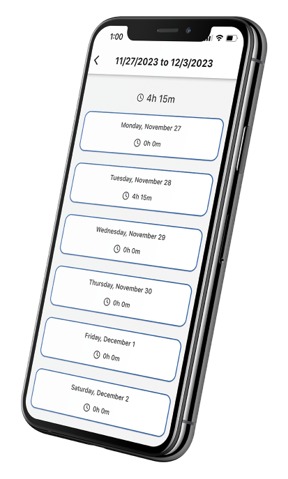
Bytecurve’s DriveOn app demonstrates these principles in practice. The interface presents drivers with a single screen showing their current assignment, a clock-in button, and a message icon. Drivers do not navigate through multiple screens or search for functions. The app opens directly to the information they need most: what route am I driving today, when does it start, and are there any messages from dispatch.
The adoption rate matters because mobile apps deliver value only when drivers actually use them. A platform with low adoption means a significant portion of the fleet still operates on paper, forcing dispatch to maintain dual workflows that eliminate efficiency gains. Districts should set a target of very high adoption within the first three months of deployment and measure progress weekly. Low adoption indicates problems with app design, training, or driver buy-in that require immediate attention.
Training strategy significantly impacts adoption. Districts that succeed schedule hands-on sessions where drivers practice clock-in and message functions with immediate support available. The training should last 15-20 minutes maximum, focusing only on the core functions drivers will use daily. Extensive feature walkthroughs overwhelm drivers and reduce confidence. The message should be: “This app makes your job easier by eliminating paper and giving you instant access to your schedule.”
Districts should also identify early adopters among the driver workforce and leverage them as peer trainers. Drivers trust other drivers more than they trust administrators. When veteran drivers demonstrate the app and vouch for its simplicity, skeptical colleagues become more willing to try it. This peer influence accelerates adoption faster than top-down mandates.
Centralized Dispatch Dashboards: Managing Late and Absent Drivers in Real Time
Transportation directors managing 50+ drivers face a daily operational challenge: how do you track driver availability, route assignments, and real-time disruptions without drowning in spreadsheets and phone calls? Traditional dispatch operations rely on whiteboards showing driver assignments, paper logs tracking absences, and phone trees for communicating changes. When a driver calls in sick at 5:30 AM, the director manually scans the whiteboard to find available substitutes, makes phone calls until someone accepts the route, updates the board, and hopes no additional drivers call in absent before routes begin.
This reactive approach fails at scale. Directors spend their mornings fighting fires instead of managing operations strategically. Information silos prevent proactive planning because the director cannot see patterns in driver absences or route disruptions. The manual workflow consumes time that should go toward driver recruitment, route optimization, and service improvement. For detailed strategies on handling these challenges, see our guide on managing assignments for late and absent drivers.
Centralized dispatch dashboards solve these problems by consolidating all driver and route information into a single view. The dashboard shows every driver, their assigned route, their current status (clocked in, absent, late, available), and real-time alerts for any disruptions requiring attention. When a driver calls in absent, the system immediately flags the affected route and displays a list of available substitute drivers. The director drags the route to an available driver, and the system pushes the assignment update to the driver’s mobile app instantly.
This command-and-control approach transforms dispatch from reactive to proactive. Directors see absence patterns over time, identifying drivers with chronic reliability issues who need intervention. The dashboard tracks route completion times, highlighting routes that consistently run late and may need schedule adjustments. Real-time GPS integration shows exactly where each bus is during routes, enabling quick response when parents call with questions about delays.
The single-view concept matters because operational efficiency depends on information consolidation. Directors cannot manage effectively when driver availability lives in one system, route assignments in another, and GPS tracking in a third. The mental overhead of switching between platforms and manually correlating data prevents directors from seeing the full operational picture. A unified dashboard eliminates this cognitive load by presenting all relevant information in one place.
Districts implementing centralized dashboards should configure alerts for the specific disruptions that matter most in their operations. Common alert types include:
- Driver late to clock-in: Triggers when a driver has not clocked in within a configurable window before their scheduled start time, enabling proactive outreach before the route is affected
- Driver absent: Triggers when a driver calls in absent or fails to clock in by route start time, immediately flagging the route for reassignment
- Route running behind schedule: Triggers when GPS data shows a bus significantly behind its planned route timing, indicating a problem requiring investigation
- Unauthorized stop: Triggers when a bus makes an unscheduled stop outside normal route parameters, potentially indicating a safety or compliance issue
The goal is actionable intelligence, not alert fatigue. Too many alerts train directors to ignore them. The dashboard should surface only the disruptions that require immediate attention, with clear recommended actions for each alert type.

How Poway Unified Avoided an $80,000 Bus Purchase Through Data-Driven Route Optimization
The Poway Unified School District case study illustrates how comprehensive driver management platforms deliver value beyond payroll savings. Poway operates 152 buses serving 4,000 students across a geographically dispersed district. The transportation department faced a capacity challenge: student enrollment growth suggested the need for an additional bus, which would cost $80,000 annually in purchase, maintenance, fuel, and driver salary.
Tim Purvis, Transportation Director at Poway, used Bytecurve 360’s integrated data to avoid this expense. The platform merged routing information with GPS tracking and driver assignment data, revealing inefficiencies invisible in separate systems. Some routes had slack time that could absorb additional stops. Certain driver assignments could be optimized to reduce deadhead miles. The data showed that Poway could handle the enrollment growth by reworking existing routes rather than adding capacity.
The district implemented the route changes and monitored results through the platform’s analytics. The optimization worked. Poway absorbed the additional students without purchasing a new bus, delivering savings that exceeded the platform cost three times over in a single decision. Purvis explained: “In just that one example, Bytecurve paid for itself about three times over. They’re just really, really good partners.”
This outcome demonstrates why integrated platforms deliver superior return on investment compared to point solutions. Separate routing, GPS, and driver management systems cannot provide the cross-functional visibility required for data-driven optimization. A routing system shows theoretical route efficiency but cannot account for actual driver performance. GPS tracking shows where buses are but not how assignments could be restructured. Driver scheduling software manages availability but lacks route context.
Bytecurve 360 merged these data sources into unified analytics that revealed optimization opportunities. The platform showed which drivers consistently completed routes ahead of schedule, indicating capacity for additional stops. GPS data identified routes with excessive dwell time at schools, suggesting schedule adjustments. Driver availability patterns showed opportunities to consolidate assignments and reduce the total number of routes required.
Districts seeking similar results should establish baseline metrics before implementing optimization changes. Track current route completion times, driver utilization rates, and total route miles. After optimization, measure the same metrics to quantify improvement. This documentation provides objective evidence of platform value and builds support for continued investment in technology-driven operations management.
The Poway example also highlights the importance of vendor partnership in achieving results. Purvis emphasized that Bytecurve listened to the district’s specific needs and configured the platform to support Poway’s optimization goals. Technology alone does not deliver results. The vendor must understand school transportation operations and work collaboratively with districts to apply the platform’s capabilities to real-world challenges.


Russellville saves $15,000 per month in payroll
– Christopher King, Transportation Director, Russellville School District


Rome Public Schools reduced payroll by $30,000 per month with Bytecurve
— Elander Graham, Rome Transportation Director
Transform Your Driver Management Operations With Proven Technology
School bus driver management platforms deliver measurable results by replacing manual processes with integrated automation. Districts implementing comprehensive solutions report substantial payroll savings, dramatic reductions in administrative processing time, and strong driver adoption rates. These outcomes stem from addressing the full driver management workflow through GPS-verified timekeeping, mobile driver communications, automated payroll processing, and centralized dispatch dashboards working together as a unified system.
The operational transformation extends beyond cost savings. Transportation directors gain real-time visibility that enables proactive management instead of reactive fire-fighting. Drivers benefit from simplified workflows that eliminate paper and reduce administrative friction. Districts avoid costly capacity additions through data-driven route optimization that reveals efficiencies invisible in disconnected systems.
Bytecurve 360 provides the integrated platform that school transportation leaders need to modernize driver management operations. The system merges routing data, GPS tracking, payroll processing, and driver communications into a single command-and-control dashboard designed specifically for school bus operations. Districts across North America rely on Bytecurve technology to manage 40,000+ buses with proven results documented in case studies from Russellville, Poway, and South Bend.
Transportation directors ready to eliminate manual processes and achieve measurable cost savings should request a demo to see how Bytecurve 360 addresses their specific operational challenges. The platform demonstration includes a review of your current workflow, identification of automation opportunities, and projected ROI based on your fleet size and operational complexity.
Frequently Asked Questions: School Bus Driver Management Technology
How quickly can districts expect ROI from driver management platforms?
Most districts see positive return on investment within 3-6 months of full deployment. Payroll savings from eliminating overpayment and reducing administrative processing time typically exceed platform costs in the first year. Russellville School District achieved substantial monthly payroll savings, delivering ROI in less than three months. Districts should calculate expected savings based on current payroll processing time, estimated timesheet error rates, and administrative staff hours spent on manual dispatch management. Conservative estimates typically show 12-month payback periods even without accounting for operational improvements like route optimization.
Do driver management platforms integrate with existing routing and GPS systems?
Yes, modern platforms are designed to integrate with major routing software and GPS tracking systems rather than replace them. Bytecurve 360 merges data from routing platforms and GPS providers into a unified dashboard, preserving districts’ existing technology investments. The integration approach matters more than the specific systems involved. Evaluate platforms based on their API capabilities and track record of successful integrations with your current infrastructure. Districts should avoid vendors that require wholesale replacement of working systems, as this approach increases cost and implementation risk while discarding institutional knowledge embedded in existing tools.
What strategies improve driver adoption of mobile apps?
High adoption rates depend on three factors: app simplicity, immediate driver benefit, and peer influence. Design the app around the single most important driver need, typically viewing schedules and clocking in. Remove unnecessary features that add complexity without clear value. Demonstrate immediate benefit by eliminating paper route books and manual timesheet submission on day one. Identify respected veteran drivers to serve as peer trainers who can vouch for the app’s ease of use. Schedule hands-on training sessions lasting 15-20 minutes maximum, focusing only on core daily functions. Measure adoption weekly and investigate quickly when rates fall below a strong threshold, as low adoption indicates problems requiring immediate attention.
How do GPS-verified timekeeping systems improve payroll accuracy?
GPS verification eliminates the two primary sources of payroll error: buddy punching and manual timesheet inaccuracies. The system requires drivers to be physically present at designated locations before accepting clock-in entries, making it impossible for one driver to clock in for another. Location data merges with routing information to create automated payroll records based on verified work time, eliminating manual entry errors. This automation reduces payroll processing time substantially while creating auditable documentation that resolves disputes quickly. Districts report virtual elimination of payroll errors after implementing GPS-verified timekeeping, removing a significant source of driver frustration that contributes to turnover.
Can small districts with fewer than 50 buses benefit from comprehensive driver management platforms?
Yes, small districts often see proportionally larger benefits because they typically have fewer administrative staff to absorb manual workload. A district with 30 buses and one transportation director spends the same hours per week on payroll processing and dispatch management as larger districts, meaning automation delivers greater relative time savings. Small districts should prioritize platforms with straightforward implementation and minimal configuration requirements, as they may lack dedicated IT staff for complex deployments. The key is selecting solutions that scale down effectively rather than enterprise platforms designed for large urban districts. Small districts should also evaluate vendors based on customer support quality, as they will rely more heavily on vendor assistance for troubleshooting and optimization.

Secure
Only authorized employees will be able to access DriveOn based on a customer specific access code. This code can be turned off as needed by an authorized administrator.

User friendly
DriveOn is easy to use with a simple, smart interface.
Available on both iOS and Google Play stores.