
BYTECURVE RESOURCES
School Bus Management Software: The Essential Operations Layer Your District Is Missing in 2026


Trusted by the Finest Names in School Bus Transportation
Student Transit Wisconsin

Fremont California School District

Renton Public Schools Washington
It’s 5:30 a.m., and the transportation director’s phone is already ringing. Another driver just called in sick. Routes need immediate reshuffling, parents are about to start calling, and the entire day’s operation is still being patched together with whiteboards, sticky notes, and frantic group texts.
School districts across the U.S. spent the last decade pouring millions into routing software and GPS tracking. Yet 83% still divert teachers, coaches, and office staff to drive buses. Why? Because everything that happens between the perfectly planned routes and the final afternoon drop-off remains painfully manual.
Routing software builds the plan. GPS tracks the buses. But who manages the 10,000 real-time decisions between the first bell and the last drop-off? The absent driver call at 5:30 a.m. The route disruption that ripples across 40 runs. The payroll reconciliation that eats up 30 hours every week.
These are exactly the problems routing software was never designed to solve, and GPS tracking simply cannot touch. Transportation directors now have a name for this critical missing piece: the operations layer. And in 2026, more districts than ever are closing the gap with powerful school bus management software.
The right school bus management software doesn’t replace your routing or GPS tools; it complements them. It’s the dedicated operations layer that finally turns daily chaos into calm, efficient, and fully accountable transportation.
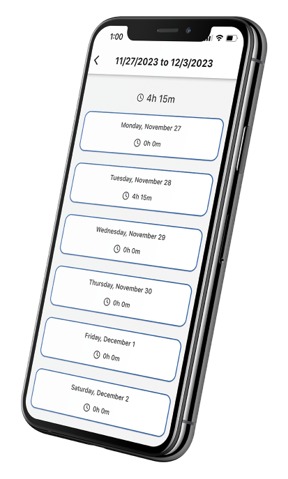
Integrated Student Transportation Software
Why Routing Software and GPS Alone Are Not Enough
A transportation director who invests in routing software for route planning and GPS for vehicle tracking has solved two critical problems: where the buses should go and where they are right now. What remains unsolved is everything that happens between those two data points.
Drivers call in sick. Substitutes need routes delivered to their phones. Dispatchers juggle reassignments across a whiteboard that was last accurate 20 minutes ago. Payroll clerks spend the week reconciling paper timesheets that drivers filled out from memory. Communication happens through group texts, radio calls, and sticky notes on a supervisor’s desk.
At Renton School District 403 in Washington, this was daily life for a team managing 100 drivers and 12,000 students. Spreadsheets and whiteboards were the operating system.
“We’re in the customer service business,” said Gregory Dutton, describing the shift after moving to a centralized scheduling and dispatch dashboard. The data from routing and GPS was already there. What changed was how the team used it during the seven hours between the first pickup and the last drop-off.
The U.S. school bus driver workforce dropped from 232,000 to 202,000 since 2020, and 90% of districts face growing ridership with a shrinking workforce. With fewer drivers and tighter budgets, the margin for operational error is shrinking. Districts cannot afford to manage a 200-bus fleet the same way they managed a 50-bus fleet.
School Bus Driver Management Software That Drivers Actually Use
Driver management is more than a scheduling grid. It is the daily workflow of getting the right driver on the right bus with the right route, confirming they clocked in, delivering real-time updates when routes change, and capturing their time accurately for payroll.
Bytecurve’s DriveOn mobile app handles this entire workflow. Over 40,000 drivers use DriveOn daily across 20+ states, and districts consistently see 95%+ adoption rates. At Russellville School District in Arkansas, where 65+ buses cover 99 square miles serving 5,694 students, adoption hit 95%, and the impact showed up immediately.
“All those 10 minutes here and 15 minutes there really do add up. It’s wonderful peace of mind,” said Christopher King, Transportation Coordinator at Russellville, describing how digital clock-in and driver communications replaced the morning scramble of paper route books and manual timesheets.
School Bus Driver Scheduling Software That Eliminates Whiteboards
The 5:30 AM absent driver call is the transportation director’s recurring nightmare. A driver is sick. Three routes need coverage. The dispatcher walks to the whiteboard, erases assignments, calls substitutes from a paper list, and hopes the information reaches the right drivers before buses roll.
With drag-and-drop scheduling in a centralized dashboard, that process takes minutes instead of the frantic hour it used to consume. Substitutes get routes delivered directly to their phones through DriveOn. Dispatch sees every assignment update in real time. No whiteboard. No group text. No ambiguity about who is driving what.
“All those 10 minutes here and 15 minutes there, those really do add up. And it’s just wonderful peace of mind to know the drivers and the admin staff are on the same page for timesheets.”
School Bus Fleet Management Software for the Operations You Already Own
Bytecurve is not another GPS system. It is the operations layer that sits on top of existing GPS investments. Districts keep their current vehicle tracking provider and add unified operational visibility across all their systems through a single dashboard.
The buyer’s biggest fear when evaluating new technology is rip-and-replace. Bytecurve integrates with the systems districts already own: Transfinder and Tyler Technologies Versatrans for routing; Zonar, Synovia, CalAmp, and Samsara for school bus GPS tracking. 45,000+ buses across 20+ states run on these integrations today. The result is not a new system replacing old ones. It is a new layer connecting them.
At Poway Unified School District in California, this unified view across 152 buses and 4,000 students led to a data-driven decision that avoided an $80,000 annual bus purchase through route optimization. The district could see, for the first time, exactly how their fleet was performing across all 131 daily routes.
“In just that one example, Bytecurve paid for itself about three times over. They’re just really, really good partners,” said Tim Purvis, Transportation Director at Poway USD.
School Bus Dispatching Software: Command and Control for Daily Operations
Dispatch is where routing plans meet daily reality. Route data says Bus 42 picks up 38 students on Oak Street at 7:15 AM. GPS says Bus 42 is currently at the maintenance yard with a flat tire. The dispatcher needs to see both facts on one screen, reassign the route, notify the substitute driver, and update parents. That is command and control.
A centralized dispatch software for student transportation combines route data, driver status, GPS positions, and real-time alerts in a single screen. Transportation supervisors move from reactive to proactive operations.
At South Bend Community Schools in Indiana, the dispatch and payroll workflows were intertwined. The same operational chaos that made dispatch stressful also made payroll a 30-hour weekly ordeal.
“It was a challenging process that never got better until we got Bytecurve,” said Nancy Halterman, describing how combining dispatch visibility with automated time capture cut payroll processing from 30 hours per week to 1-2 hours.
School Bus Scheduling Software Meets Payroll Automation
This is the strongest financial differentiator of an integrated operations platform. When driver clock-in, route assignments, and payroll processing all flow through one system, the savings are not incremental. They are structural.
Paper timesheets require drivers to record hours from memory at the end of each day. Those timesheets go to a payroll clerk who manually enters the data, reconciles discrepancies, and processes payment. Every step introduces error, delay, and cost.
At Rome City Schools in Georgia, 106 transportation employees generated enough timesheet errors and administrative overhead to cost the district $300,000 per year. Automated time and attendance with GPS-verified clock-in eliminated that waste entirely.
“We never expected this level of savings, but our business office was thrilled,” said Elander Graham, Transportation Director at Rome City Schools.
“In just that one example, Bytecurve paid for itself about three times over. Bytecurve listened to every word we had to say. They’re just really, really good partners.”
School Bus Time and Attendance That Eliminates Paper Timesheets
The workflow is simple. A driver opens DriveOn, which records a GPS-verified clock-in. Hours are calculated automatically based on actual start and stop times. The data is exported directly to the district’s payroll system. No buddy-punching. No manual data entry. No 30-hour reconciliation cycles.
At Russellville, this cut monthly payroll processing time by 80% and $15,000 per month in labor cost savings, even after the district raised driver wages.
School Bus Payroll Software With GPS Verification
GPS verification is what makes the payroll savings possible. When clock-in data is tied to vehicle location, districts have an objective record of when drivers actually started and stopped work. The disputes, the estimates, the “I forgot to write it down” conversations all disappear.
Rome City’s $300,000 in annual savings came primarily from eliminating overpayment that neither the drivers nor the payroll team realized was happening. When every minute is tracked by GPS, the numbers are the numbers.
The Operations Layer Advantage: What Changes When Everything Connects
When routing data, GPS tracking, driver communications, scheduling, dispatch, and payroll all flow through a single platform, transportation directors gain operational visibility they have never had. Not in separate tabs. Not across three logins. In one school bus operating platform.
Student Transit in Wisconsin, managing roughly 500 buses across three districts, described the shift in two words: “Centralized Command, Centralized Control.”
“You don’t know what you don’t know. And you might not know what you need until you see it for yourself,” said Martin Klukas of Student Transit.
Districts are not missing routing software. They are not missing GPS. They are missing the connective tissue between every system they already own. And in 2026, as driver shortages persist, budgets tighten, and 26 million students depend on school buses every day, that connective tissue is no longer optional.
“We designed Bytecurve to bridge the gap between routing and GPS. Our goal is to create a command-and-control system for transportation leaders,” said GP Singh, Founder and CEO of Bytecurve.



Russellville saves $15,000 per month in payroll
– Christopher King, Transportation Director, Russellville School District
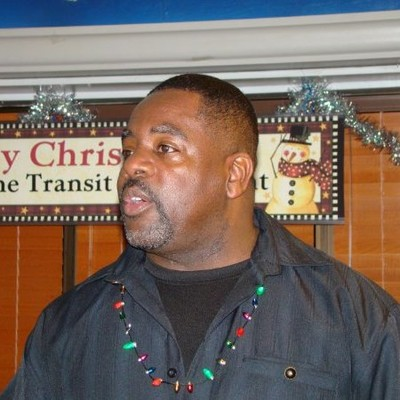
Rome Public Schools reduced payroll by $30,000 per month with Bytecurve
— Elander Graham, Rome Transportation Director
Frequently Asked Questions About School Bus Management Software
What is school bus management software, and how is it different from routing software?
Routing software plans where buses go. GPS tracks where buses are. School bus management software handles everything in between: daily scheduling, dispatch operations, driver communications, time and attendance, and payroll processing. Bytecurve 360 is the only school bus management software platform that unifies all of these functions in a single dashboard, working on top of existing routing and GPS investments.
How does school transportation software compare across vendors?
The key architectural difference is open versus closed. Some platforms replace existing systems entirely, requiring districts to abandon their routing and GPS investments. Bytecurve takes the open approach: districts keep their routing and GPS providers and add the operations layer on top. This preserves existing investments while eliminating the operational gaps between systems.
What student transportation software features matter most for daily operations?
Five daily pain points define the operations layer: absent driver management, route disruption handling, driver-dispatch communications, real-time time tracking, and payroll processing. Most routing and GPS systems do not address any of these. A comprehensive student transportation software platform covers all five from a single dashboard, replacing the whiteboards, spreadsheets, and group texts that most districts still rely on.
How does school bus fleet management software reduce costs?
Three mechanisms drive cost reduction. First, payroll automation eliminates manual timesheets, saving Rome City Schools $300,000 per year. Second, unified data visibility enables route optimization, helping Poway USD avoid an $80,000 annual bus purchase. Third, operational efficiency reduces overtime, redundant runs, and administrative hours. Districts using payroll automation through an integrated operations platform consistently report five- and six-figure annual savings.
Does transportation scheduling software integrate with existing GPS and routing systems?
Yes. Bytecurve integrates with Transfinder and Tyler Technologies Versatrans for routing, and Zonar, Synovia, CalAmp, and Samsara for GPS tracking. The platform enhances existing investments rather than replacing them. Over 45,000 buses across 20+ states run on these integrations today, with the operations layer pulling data from each system into a unified command-and-control dashboard.
How long does implementation take for a school bus operations platform?
Typical implementation takes 4-8 weeks with dedicated onboarding support. The DriveOn driver app achieves 95%+ adoption rates consistently, with Russellville reaching 90% adoption during initial rollout. Schedule a platform demo to see the implementation process and timeline for your fleet size.

Secure
Only authorized employees will be able to access DriveOn based on a customer specific access code. This code can be turned off as needed by an authorized administrator.

User friendly
DriveOn is easy to use with a simple, smart interface.
Available on both iOS and Google Play stores.