
BYTECURVE RESOURCES
Why More Drivers Won’t Fix the Shortage


Trusted by the Finest Names in School Bus Transportation
Student Transit Wisconsin

Fremont California School District

Renton Public Schools Washington
Every fall, the cycle repeats: school districts scramble to fill empty driver seats, post hiring bonuses, and adjust routes to cover gaps. But here’s the uncomfortable truth most transportation leaders already know: in a 2024 nationwide survey of more than 400 United States school leaders, 91% reported their transportation operations were constrained by school bus driver shortages, and 60% said the shortage had been severe enough to require shortened or reduced bus routes. Yet despite aggressive recruiting campaigns and competitive wages, the problem persists year after year.
The reason? Districts are treating a symptom instead of the disease. The real issue isn’t that you need more drivers. It’s that your current operations are so inefficient that you need more drivers than you should.
Integrated Student Transportation Software
The Real Problem Isn’t the Number of Drivers, It’s How You’re Using Them
Walk into most transportation offices, and you’ll see the same scene: whiteboards covered in route changes, spreadsheets tracking who called out, and dispatch coordinators juggling phone calls while trying to reassign routes in real time. This chaos isn’t caused by driver shortages. It creates them.
When your dispatch system runs on manual processes and disconnected tools, every operational decision takes longer and requires more people. A driver calls out sick at 5:30 AM, and suddenly three staff members spend 20 minutes figuring out coverage instead of two minutes reassigning the route through a centralized platform. Routes run longer than necessary because you’re optimizing based on outdated assumptions rather than real-time data. Drivers waste time on redundant stops or inefficient routing patterns that could be eliminated with better visibility into actual ridership and GPS data.
This operational drag compounds across your entire fleet. You think you need 150 drivers when proper school bus routing software would reveal you could serve the same students with meaningfully fewer. The “shortage” is actually a scheduling and efficiency problem disguised as a hiring problem.
Modern bus management software integrates routing data with live GPS tracking and automated dispatch capabilities, giving you the operational visibility to understand where drivers are actually spending their time. When Renton School District 403 implemented Bytecurve 360, they transformed their dispatch operations from spreadsheet chaos to centralized command and control. As Transportation Director Gregory Dutton put it, “We’re in the customer service business,” and that shift in operational clarity allowed them to serve students more effectively with their existing driver count.
What Happens When Districts Focus Only on Recruitment
The recruitment-first approach creates a predictable pattern: hire quickly to fill gaps, rush through training to get drivers on routes, watch those same drivers leave within months because the underlying job conditions haven’t improved. A 2025 survey found that 81% of United States school administrators still face a school bus driver shortage, and 26% have had to cut or shorten bus routes as a direct result, proving that hiring alone doesn’t solve the problem.
The cost of this cycle is staggering. Between recruitment advertising, background checks, CDL training programs, and the productivity loss while new drivers learn routes, each driver replacement can cost thousands of dollars. More importantly, it burns out your dispatch team and frustrates the reliable drivers who end up covering extra routes when new hires don’t work out.
Worse, recruitment-focused strategies often lower hiring standards just to fill seats. When you’re desperate for bodies, you accept candidates who might not be the right fit for the unique demands of student transportation. Those drivers struggle with the job’s early hours, split shifts, and behavioral management challenges. They leave quickly, and you’re back to recruiting again.
The real issue? You haven’t addressed why drivers leave in the first place. Manual timekeeping creates payroll disputes. Poor communication tools leave drivers feeling disconnected from dispatch. Inefficient routes mean longer workdays for the same pay. Until you fix these operational problems, every new hire is just temporary relief from a permanent problem.
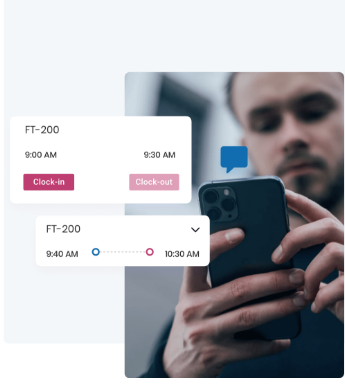
Bytecurve’s Time and Attendance System eliminates one of the biggest driver frustrations: payroll accuracy. GPS-verified clock-in and clock-out through the DriveOn Mobile App means drivers never have to worry about disputed hours or manual timesheet errors. South Bend Community Schools cut payroll processing from 30 hours per week to 1-2 hours by replacing manual timesheets with automated, GPS-verified time tracking. That’s not just administrative efficiency, it’s a fundamental improvement in driver experience that directly impacts retention.
The Efficiency Multiplier: Getting More from Your Current Team
The breakthrough comes when you stop asking, “How do we hire more drivers?” and start asking, “How do we serve more students with the drivers we have?” That shift in thinking unlocks operational improvements that recruitment alone can never achieve.
Centralized dispatch through platforms like Bytecurve 360 consolidates route management, driver communications, and real-time GPS tracking into a single dashboard. Instead of dispatch coordinators maintaining separate systems for routing software, GPS tracking, driver schedules, and payroll, everything lives in one place. When a driver calls out, reassignment takes minutes instead of phone tag and whiteboard shuffling.
Real-time route optimization based on actual ridership data reveals inefficiencies you couldn’t see before. Maybe that 45-minute route could be 32 minutes with better stop sequencing. Perhaps three routes could be consolidated into two during periods of lower ridership. These aren’t theoretical savings, they’re operational realities that become visible when you have integrated data showing where buses actually are and how long tasks actually take.
The DriveOn Mobile App transforms driver communication from a game of telephone into instant, two-way messaging. Route changes, schedule updates, and emergency notifications reach drivers immediately instead of relying on them checking a bulletin board or answering a phone call while driving. Drivers clock in and out through the app with GPS verification, eliminating the administrative burden of manual timesheets while giving dispatch real-time visibility into who’s actually working.
Student Transit, which operates approximately 500 buses across three Wisconsin districts, dubbed Bytecurve their “Centralized Command, Centralized Control” system. Operations Manager Martin Klukas captured the transformation perfectly: “You don’t know what you don’t know. And you might not know what you need until you see it for yourself.” That visibility—seeing the full operational picture in real time— is what allows you to maximize your existing driver capacity instead of constantly recruiting to fill artificial gaps.
Making the Shift: From Hiring Mode to Optimization Mode
The transition from recruitment-focused to efficiency-focused operations starts with honest assessment. Pull your route data and ask, “How much time do drivers actually spend transporting students versus waiting, deadheading, or covering inefficient routing patterns?” Review your payroll records: How many hours are you paying for tasks that could be automated or eliminated? Analyze your turnover: are drivers leaving because you can’t find good candidates or because the job itself is unnecessarily difficult?
Most districts discover that operational efficiency strategies reveal significant capacity gains hiding in their current operations. That’s the equivalent of hiring a substantial number of additional drivers for a 150-bus fleet without posting a single job ad.
Implementation requires integrated technology, not just adding more software. Your routing system needs to talk to your GPS tracking. Your GPS data needs to feed your payroll system. Your driver communications need to connect to your dispatch dashboard. When these systems work together, you eliminate the manual data entry, duplicate record-keeping, and coordination overhead that currently requires extra staff to manage.
The Scheduling and Dispatch Module within Bytecurve 360 exemplifies this integration. Real-time driver and vehicle assignment pulls from GPS location data and routing schedules simultaneously. Absent driver management automatically identifies coverage options based on current assignments and proximity. Route rerouting capabilities let you adjust on the fly without rebuilding entire schedules. These aren’t separate tools requiring separate logins, they’re unified capabilities that work together because they share the same operational data.
Success metrics shift from “how many applications did we receive?” to “how many routes can we cover with existing staff?” and “how much time are we saving in dispatch operations?” Rome City Schools in Georgia achieved substantial annual savings through automated payroll processing alone, money that came from eliminating inefficiency, not from hiring fewer drivers. Russellville School District in Arkansas realized significant monthly labor cost savings while actually increasing driver wages, proving that retention-focused approaches create budget flexibility that recruitment strategies consume.
The driver shortage narrative persists because it’s easier to blame external factors than to acknowledge internal operational problems. But the districts that have solved their “shortage” didn’t suddenly discover an untapped pool of CDL holders. They built systems that let them do more with the drivers they already had, while simultaneously making the job better for those drivers. That’s not just more sustainable than endless recruitment, it’s the only approach that actually works.
Ready to discover how much capacity is hiding in your current operations? Request a demo to see how Bytecurve transforms driver shortage management from a hiring problem into an efficiency opportunity.


Russellville saves $15,000 per month in payroll
– Christopher King, Transportation Director, Russellville School District


Rome Public Schools reduced payroll by $30,000 per month with Bytecurve
— Elander Graham, Rome Transportation Director

Secure
Only authorized employees will be able to access DriveOn based on a customer specific access code. This code can be turned off as needed by an authorized administrator.

User friendly
DriveOn is easy to use with a simple, smart interface.
Available on both iOS and Google Play stores.