
BYTECURVE RESOURCES
How School Districts Cut Payroll Costs With Modern Technology


Trusted by the Finest Names in School Bus Transportation
Student Transit Wisconsin

Fremont California School District

Renton Public Schools Washington
Transportation directors know the numbers don’t work. Driver wages go up, budgets stay flat, and somehow you’re supposed to keep buses rolling. But here’s what most districts miss: the real payroll drain isn’t driver salaries. It’s the hidden costs buried in manual timekeeping, errors, and administrative overhead that inflate your transportation budget by thousands every month.
In 2024, 38% of United States school leaders reported that staff were being pulled away from core responsibilities or education hours to drive school buses or vans, according to a nationwide survey of more than 400 school leaders reported by School Transportation News. When your transportation office spends weeks reconciling paper timesheets instead of managing routes, that’s not a staffing problem. That’s a technology problem with a dollar cost.
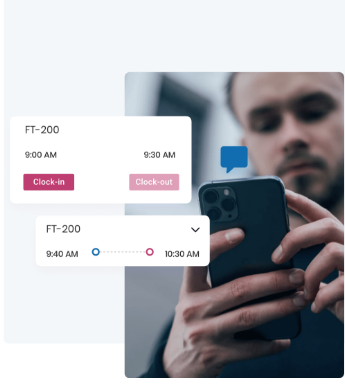
Integrated Student Transportation Software
Why Manual Payroll Processing Drains Your District’s Budget
Paper timesheets look cheap until you calculate what they actually cost. A driver clocks in five minutes early, rounds up departure times, and adds ten minutes for a route that ran short. Multiply those minutes across your driver pool over a month, and you’re paying for hours that never happened.
The errors compound. Districts using multi-colored paper forms for different shifts can spend weeks each cycle just adding hours and verifying entries. Payroll staff can’t confirm whether drivers completed their routes or left early. Disputes over hours worked require manual investigation. Overtime calculations rely on best guesses. Every error means either overpaying drivers or underpaying them and dealing with grievances.
The administrative burden is often more significant than most directors realize. Your payroll coordinator isn’t just processing timesheets. They’re hunting down missing forms, calling drivers to verify hours, reconciling discrepancies between dispatch logs and submitted times, and manually entering data into multiple systems. That’s substantial labor every month on tasks that technology handles automatically.
GPS-Verified Timekeeping Eliminates the Payroll Guesswork
Automated GPS-verified timekeeping removes the guesswork from payroll entirely. Drivers clock in and out through a mobile app. GPS confirms they’re at the bus yard, not at home. The system logs actual route start and end times from vehicle tracking data. No rounding, no estimates, no disputes about whether someone worked their scheduled hours.
The accuracy improvement isn’t theoretical. Districts that implement GPS-verified time tracking consistently find they have been overpaying by small margins for every driver and every shift. Five minutes here, ten minutes there. It doesn’t sound like much until you multiply it across your staff over the school year. That’s when you discover you’ve been paying for hundreds of hours that never actually happened.
Integration with existing systems matters more than most directors expect. A school bus payroll system that pulls data directly from your GPS provider and routing software eliminates duplicate entry. Payroll staff aren’t manually transferring times from one spreadsheet to another. The platform automatically calculates regular hours, overtime, and premium pay based on your union contract rules. What used to require cross-referencing three different systems now happens in one dashboard.
From Weeks to Days: Cutting Payroll Processing Time Dramatically
The administrative time savings hit immediately. Districts that switch from paper to automated payroll report dramatic reductions in processing time. Your payroll coordinator stops being a data entry clerk and starts managing exceptions only. The system handles the routine work: time verification, overtime calculation, and pay period closeout.
Error reduction matters as much as time savings. Manual payroll processing generates mistakes. A transposed number, a missed overtime threshold, and an incorrect shift differential can all lead to errors that require correction, documentation, and often a supplemental payroll routine. Each error requires correction, documentation, and often a supplemental payroll run. Automated systems with built-in validation catch these problems before you cut checks. When payroll errors drop to near zero, you stop spending hours on corrections and grievances.
The ripple effects extend beyond the payroll office. When your integrated dispatch platform connects driver assignments, GPS tracking, and time verification in one system, dispatch supervisors can confirm route completion in real time. They’re not calling drivers at the end of the day to verify everyone finished their runs. The data feeds directly from GPS to payroll without human intervention.
Real Districts, Real Savings: What Monthly Payroll Savings Look Like
Russellville School District in Arkansas provides a concrete example of what payroll technology actually delivers. Before implementing automated timekeeping, the district relied on paper-based systems that took weeks each month to process. Payroll errors were frequent. Staff had no efficient way to verify time entries against actual work performed.
After deploying Bytecurve 360 integrated with GPS tracking, Russellville achieved $15,000 monthly payroll savings while simultaneously increasing driver wages. The savings came from eliminating overpayment for unworked time, not from cutting staff or reducing hours. The district also saw a dramatic reduction in payroll processing time and virtually eliminated payroll errors. Driver adoption of the mobile app reached an overwhelming majority, proving that technology implementation doesn’t require fighting your workforce.
The payroll savings funded other priorities. Russellville used the recovered costs to increase driver compensation and invest in parent tracking capabilities. That’s the real value proposition: technology that pays for itself while improving operations across multiple areas. As Christopher King, Transportation Coordinator at Russellville, put it, “All those 10 minutes here and 15 minutes there really do add up. It’s wonderful peace of mind.”
The pattern repeats across districts that implement automated payroll systems. The technology identifies and eliminates small inefficiencies that manual processes can’t catch. GPS verification ensures you only pay for actual hours worked. Automated calculations prevent overtime miscalculations. Integration with dispatch systems confirms route completion without phone calls or paperwork. The cumulative effect: significant monthly savings that compound over the school year.
Technology That Pays for Itself
Payroll technology isn’t an expense. It’s a cost recovery tool that finds money you’re already spending inefficiently. The districts seeing the biggest savings aren’t cutting driver hours or reducing service. They’re simply paying for actual work performed instead of estimated hours and eliminating the administrative overhead that manual systems require.
The ROI calculation is straightforward. If automated timekeeping saves your district even thousands of dollars monthly, that sum compounds into substantial annual savings. The platform typically costs a fraction of that. The payback period runs months, not years. And the operational improvements extend far beyond payroll: better dispatch visibility, reduced administrative burden, improved driver communication, and data for route optimization decisions.
If your transportation department still processes payroll manually, you’re losing money every month. The technology exists. The case studies prove it works. The only question is how much longer you’ll wait before capturing those savings for your district.
Ready to see what automated payroll could save your district? Request a demo from bytecurve to get a custom analysis of your current payroll costs and potential savings.


Russellville saves $15,000 per month in payroll
– Christopher King, Transportation Director, Russellville School District

Rome Public Schools reduced payroll by $30,000 per month with Bytecurve
— Elander Graham, Rome Transportation Director

Secure
Only authorized employees will be able to access DriveOn based on a customer specific access code. This code can be turned off as needed by an authorized administrator.

User friendly
DriveOn is easy to use with a simple, smart interface.
Available on both iOS and Google Play stores.